
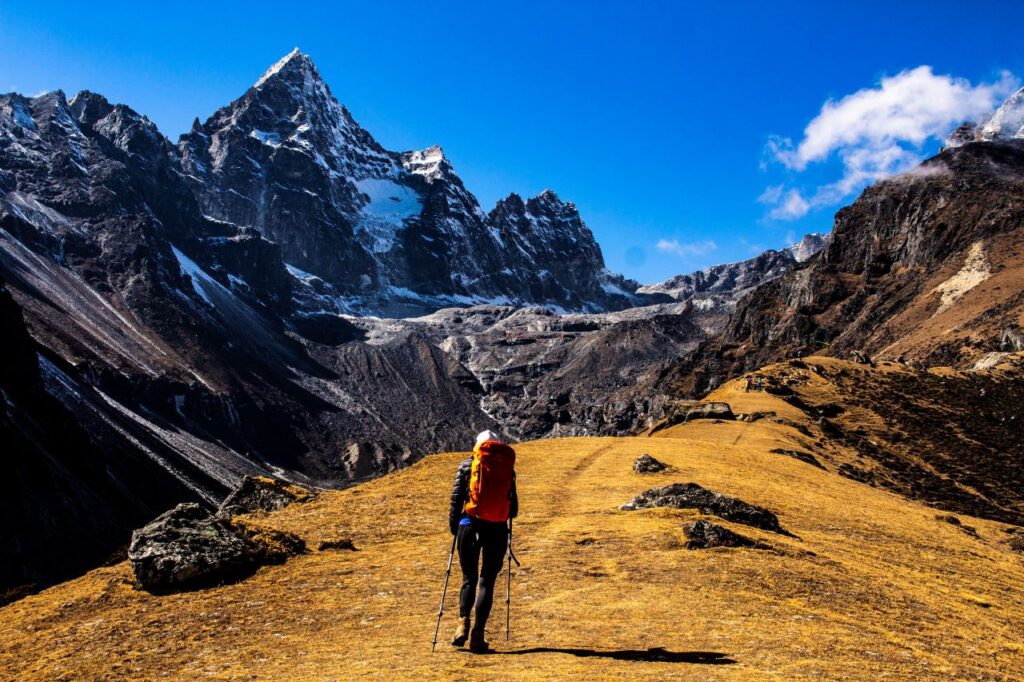
There are places in Nepal where the air feels thinner, the silence feels louder, and every step feels like a conversation with the Himalayas. Peak climbing here is not just about reaching summits; it’s about walking into a world where glaciers move slowly, prayer flags fight the wind, and mountains feel alive.
For many travelers, Nepal becomes the place where trekking turns into climbing, and climbing turns into transformation. Here are the top 10 peak climbing destinations in Nepal, told not just as mountains, but as experiences that stay with you long after you descend.
Table of Contents
Island Peak (Imja Tse) – The First Step Into the Big Mountains
Island Peak rises like a frozen island in a sea of ice, tucked deep inside the Everest region. The journey to it already feels like a dream, walking through Namche Bazaar, crossing suspension bridges, and slowly entering the world of Everest.
Climbers come here because it feels like a gateway. It is where many people first touch real ice, rope up on a glacier, and take their first serious steps into mountaineering. From the summit, Everest, Lhotse, and Ama Dablam stand like giants watching silently.
To climb Island Peak, permits from the Nepal Mountaineering Association and Sagarmatha National Park are required. The mountain is usually climbed in spring and autumn, when the skies are clear and the ice is stable. The journey typically costs between USD 2,500 and 5,000, depending on support and services.
Mera Peak – Where the Sky Opens Up
Mera Peak feels less like a climb and more like a long walk into the sky. Hidden in a remote corner of the Everest region, the trail takes you far away from crowds and deep into silence.
What makes Mera unforgettable is the view. From its summit, five of the world’s highest peaks rise above the horizon Everest, Lhotse, Makalu, Cho Oyu, and Kangchenjunga. It feels like standing on the roof of the roof of the world.
It is not the most technical climb, but the altitude is serious, making it a true endurance journey. Permits from the Nepal Mountaineering Association and Makalu Barun National Park are required. Spring and autumn are the best seasons, and the cost usually ranges from USD 2,800 to 6,000.
Lobuche East – Where the Mountain Tests You
Lobuche East is where trekking starts to turn into real climbing. The mountain sits near Everest Base Camp, watching over one of the most famous routes on Earth.
This peak is not gentle. It has steep ridges, icy walls, and fixed ropes that demand focus and courage. Climbers come here to test themselves before moving on to bigger expeditions.
The reward is a view that feels unreal: Everest, Nuptse, Pumori, and endless Himalayan waves. You’ll need permits from the Nepal Mountaineering Association and Sagarmatha National Park. It is typically climbed in spring and autumn, with costs ranging from USD 3,000 to 6,500.
Pisang Peak – The Silent Giant of Annapurna
Pisang Peak rises above the Annapurna Circuit like a quiet guardian. From below, it looks peaceful. From the ridge, it feels powerful.
Climbers often choose Pisang because it offers a perfect balance, challenging enough to feel real, but not overwhelming. The trail passes through traditional villages before opening into snow and rock.
Permits from the Nepal Mountaineering Association and Annapurna Conservation Area are required. The best seasons are spring and autumn, and the cost is usually between USD 2,000 and 4,500.
Yala Peak – The Gentle Beginning
Yala Peak is often where many Himalayan dreams begin. Located in the Langtang region, it is one of the easiest trekking peaks in Nepal.
The journey feels warm and human, passing through Tamang villages, prayer wheels, and forests before reaching icy landscapes. From the summit, Shishapangma dominates the horizon.
It is ideal for beginners taking their first step into climbing. A permit from the Nepal Mountaineering Association and Langtang National Park is required. Costs range from USD 1,500 to 3,000.
Chulu East – The Hidden Challenge of Annapurna
Chulu East doesn’t give itself easily. It rises above the Annapurna Circuit, demanding strength, stamina, and determination.
The climb feels wild and exposed, but the reward is unforgettable. From the top, the Annapurna range stretches endlessly, with Dhaulagiri standing far in the distance.
Permits from the Nepal Mountaineering Association and Annapurna Conservation Area are required. Spring and autumn are the best seasons, and costs range from USD 2,500 to 5,500.
Tent Peak (Tharpu Chuli) – The Pyramid in the Sanctuary
Deep inside the Annapurna Sanctuary, Tent Peak rises like a perfect pyramid of snow and rock.
The journey here is already special, passing through the legendary Annapurna Base Camp trail. Climbers often feel like they are entering a natural amphitheater surrounded by towering walls of ice.
It is moderately technical and requires basic mountaineering skills. Permits from the Nepal Mountaineering Association and Annapurna Conservation Area are required. Costs usually range from USD 2,000 to 4,000.
Dhampus Peak – The Remote Edge of Adventure
Dhampus Peak feels far away from everything. Located in the Dhaulagiri region, it is rarely crowded, offering a raw and untouched Himalayan experience.
The climb is more than just a summit; it is a journey through isolation, silence, and pure mountain wilderness.
Permits from the Nepal Mountaineering Association and the Dhaulagiri conservation areas are required. The peak is typically climbed in spring and autumn, with costs between USD 3,000 and 6,000.
Paldor Peak – The Quiet Beauty Between Valleys
Paldor Peak sits quietly between the Langtang and Ganesh Himal regions, often overlooked but deeply rewarding.
The climb blends cultural trekking with alpine adventure. Villages, forests, and glaciers all come together in one journey.
It is less commercialized, making it perfect for those who want solitude. Permits from the Nepal Mountaineering Association and Langtang National Park are required. Costs usually range from USD 2,500 to 5,000.
Summary
Nepal’s peaks are not just destinations; they are stories written in ice, wind, and silence. Each summit offers something different: confidence, challenge, fear, beauty, or all of them at once.
For some, it is about standing atop a mountain. For others, it is about realizing how small and alive they feel in the middle of the Himalayas.
Either way, once you start climbing in Nepal, the mountains don’t leave you; they stay with you.
Read Related Blogs
Mount Everest Base Camp in Nepal