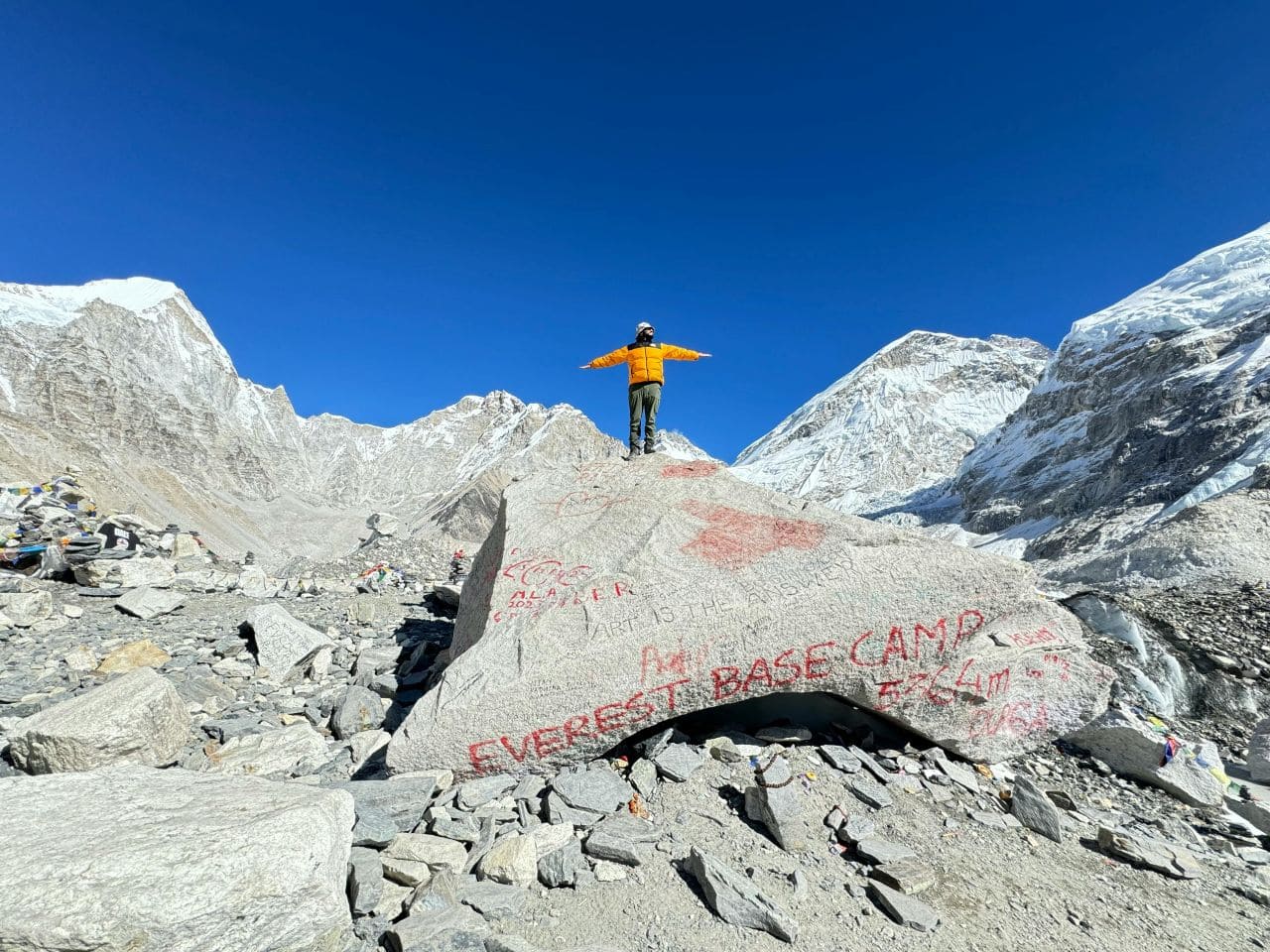
There is a moment, somewhere between the clouds and the cold, when you look up and realize you are standing at the foot of the highest mountain on Earth. Your lungs burn, your legs ache, and your eyes fill not from the wind, but from something deeper. That moment is Everest Base Camp. And no photograph, no story, no screen can ever prepare you for what it feels like to actually be there.
Mount Everest Base Camp in Nepal is one of the world’s most iconic bucket-list destinations, located in the heart of the Khumbu Region (Khumbu Valley) within Sagarmatha National Park, in Nepal’s Solukhumbu District, close to the Nepal–Tibet border.
Sitting at an extraordinary elevation of 5,364 m (17,598 ft) at South Base Camp, it lies beneath the world’s highest peak, Mount Everest (Sagarmatha in Nepali, Chomolungma in Tibetan), which rises to 8,849 m (29,032 ft) in the Himalayan Range.
The classic trekking route to Everest Base Camp begins from Lukla (Tenzing-Hillary Airport) and follows a legendary teahouse trail through dramatic alpine terrain, passing key stops such as Namche Bazaar (the main acclimatization hub), Tengboche Monastery, and high-altitude settlements like Dingboche, Lobuche, and Gorak Shep.
This journey continues across rugged glacial moraine and the vast Khumbu Glacier, leading toward the dramatic edge of the Khumbu Icefall, one of the most challenging sections of any expedition base camp environment.
Trekking in this high-altitude environment exposes adventurers to thin air, low oxygen levels (hypoxia), and sub-zero temperatures, where proper acclimatization is essential to reduce the risk of Altitude Sickness (AMS).
The route traverses permafrost zones, shifting weather systems, and physically demanding ascents that require strong physical endurance and mental resilience. Trekkers often rely on essential gear such as crampons, ice axes, down jackets, and trekking poles, while local Sherpa communities and guides play a vital role in navigation, safety, and cultural insight.
Beyond its physical challenge, the Everest Base Camp trek is a deeply spiritual journey enriched by Buddhist culture, colorful prayer flags, stupas, and mani stones that line the trail. The region is also historically significant, honoring the legacy of Sir Edmund Hillary and Tenzing Norgay, who first reached the summit in 1953.
Trekkers travel through remote Himalayan landscapes where porters and yaks carry supplies, and helicopter rescue or evacuation remains an important safety option in emergencies.
With required permits and TIMS cards, the journey is best undertaken during the spring (March–May) or autumn (September–November) climbing seasons, when conditions are most stable. The Everest Base Camp trek is more than just a hike it is a once-in-a-lifetime experience, offering panoramic Himalayan views, raw natural beauty, and a deep connection to one of the most remote wilderness regions on Earth.
Why should you do the Everest Base Camp in Nepal?
The Everest Base Camp trek (EBC trek Nepal) is widely considered a must-do trek in Nepal and one of the most iconic bucket-list treks in the world. There are many powerful reasons to trek EBC, but the most compelling one is that it is truly a once-in-a-lifetime journey along a legendary Himalayan trail leading to the base of the world’s highest peak.
This is not just a trek, it is a life-changing adventure and a deeply transformative journey that tests your physical challenge and builds strong mental resilience. Every step brings a growing sense of accomplishment, as you move through raw natural beauty, awe-inspiring landscapes, and an unforgettable experience that defines a truly rewarding trek.
Along the route, you are surrounded by panoramic Himalayan views, towering peaks, deep glacial valleys, and untouched alpine wilderness. The remote terrain offers some of the most breathtaking scenery in the world, with endless snow-capped mountains and a constantly changing, dramatic landscape that feels almost unreal.
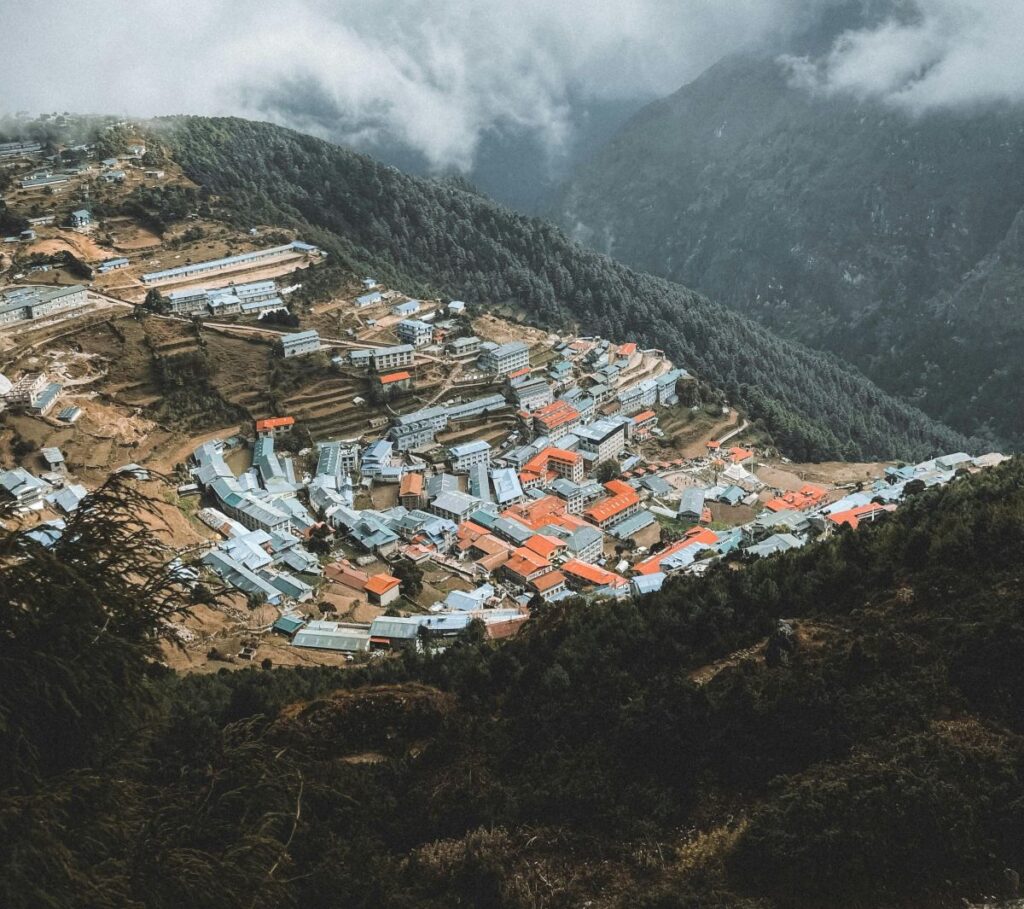
Culturally, the journey is equally powerful. You will experience authentic Sherpa culture, rich Buddhist heritage, and visit ancient monasteries, decorated with prayer flags, mani stones, and traditional symbols of faith. Passing through traditional villages, you witness the simple yet inspiring Himalayan community and their local lifestyle.
To truly embark, explore, venture, discover, and experience this trail is to immerse yourself in something far beyond a normal trek it becomes a personal story of endurance, discovery, and transformation in the Himalayas.
Ready to turn this dream into reality? Get a customized Everest Base Camp package on WhatsApp.
What is the altitude of Everest Base Camp?
The Everest Base Camp altitude refers to the height above sea level of the South Base Camp, located at 5,364 metres (17,598 feet) in Nepal’s Khumbu Glacier region. This high-altitude zone is one of the most extreme trekking environments on Earth.
As trekkers gain elevation, they experience increasing atmospheric pressure changes, reduced oxygen levels, and a true thin air / low oxygen environment. These hypoxic conditions make every step more demanding as the body adjusts to the altitude threshold and continues its elevation gain toward Base Camp.
Proper acclimatization is essential to avoid altitude sickness (AMS), and in severe cases, life-threatening conditions like HACE (High Altitude Cerebral Edema) and HAPE (High Altitude Pulmonary Edema). Trekkers often use Diamox (Acetazolamide), monitor oxygen saturation with a pulse oximeter, and include acclimatization rest days in places like Namche Bazaar and Dingboche.
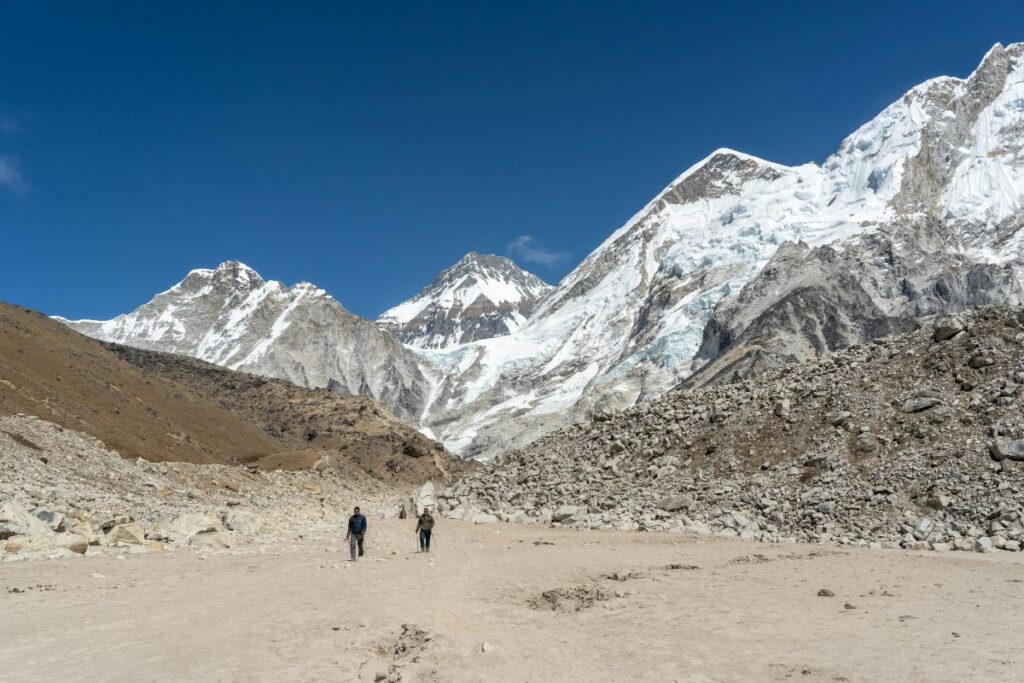
The route passes key locations such as Lukla, Namche Bazaar, Lobuche, Gorak Shep, and finally the Khumbu Glacier and Khumbu Icefall area. On both the Nepal side (South Base Camp) and the Tibet side (North Base Camp in Rongbuk Valley), altitude plays the defining role in expedition difficulty.
In simple terms, altitude is not just a number it defines the elevation, height, ascent level, and high point of your entire Himalayan journey.
Can I Do the Climbing of Everest Base Camp?
Yes, the Everest Base Camp trek (EBC climbing) is a non-technical trek, meaning you do not need mountaineering skills to complete it. It is accessible to fit adults, making it one of the most popular high-altitude adventures in Nepal.
Unlike true mountaineering expeditions, reaching Everest Base Camp does not require fixed rope ascension, crampons, ice axes, or supplemental oxygen. Those tools are used only for summit attempts, not for trekking to Base Camp. Instead, the route follows a well-defined mountain footpath with a teahouse trekking system, passing through suspension bridges, rocky terrain, and glacial moraine paths.
Trekkers can choose between a guided trek or a self-guided trek, both following a supported hiking route across the Khumbu region. While the trail is non-technical, it still demands serious cardio training, endurance training, and pre-trek physical preparation, especially for high-altitude sections.
Proper acclimatization strategy, health checks, and sometimes altitude medication are recommended. Many trekkers also do loaded backpack training and consult doctors before undertaking the journey.
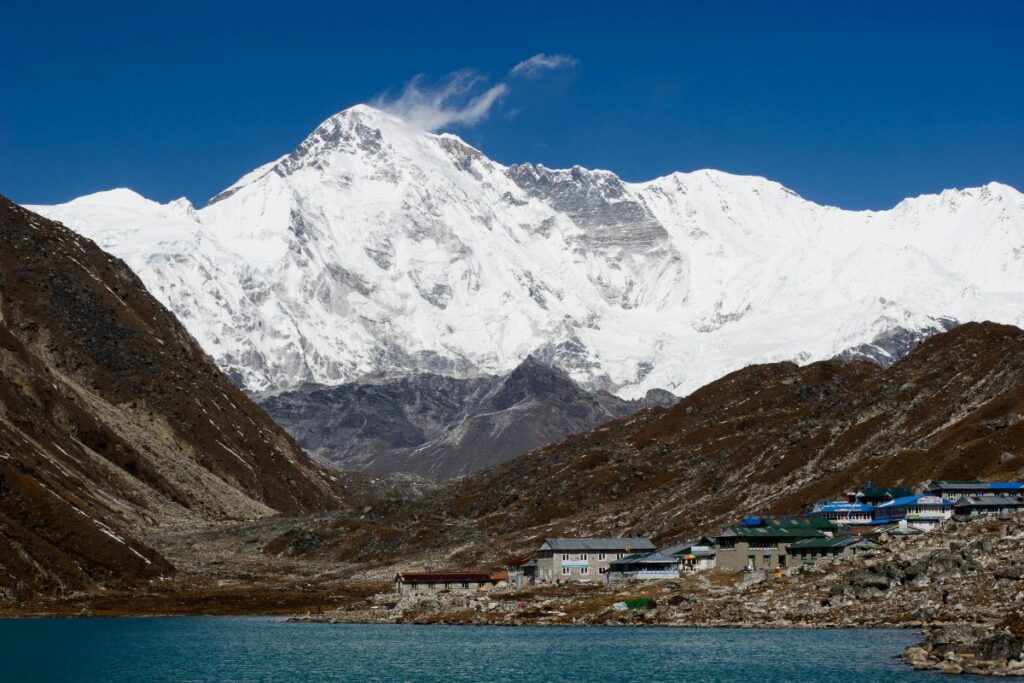
In simple terms, you are not climbing Everest, you are ascending, hiking, trekking, and traversing one of the world’s most iconic trails toward the base of the mountain.
What is the Everest Base Camp Trek in Nepal?
The Everest Base Camp trek (EBC trek Nepal) is a classic Nepal Himalayan trek that follows the famous South Col trekking route through the Khumbu Region inside Sagarmatha National Park.
The journey usually takes 12–16 days, following a structured Lukla to EBC route with key stops such as Phakding, Namche Bazaar, Tengboche Monastery, Dingboche, Lobuche, Gorak Shep, and finally Everest Base Camp and Kala Patthar. The trek includes planned acclimatization days and rest days, ensuring safe altitude progression.
At Base Camp, trekkers stand near the dramatic Khumbu Glacier and Khumbu Icefall, surrounded by the immense Base Camp plateau that supports major climbing expeditions.
To enter the region, trekkers require official documentation, including the Sagarmatha National Park Entry Permit, TIMS Card, and Khumbu Pasang Lhamu Rural Municipality Permit, along with permit fees and registration.
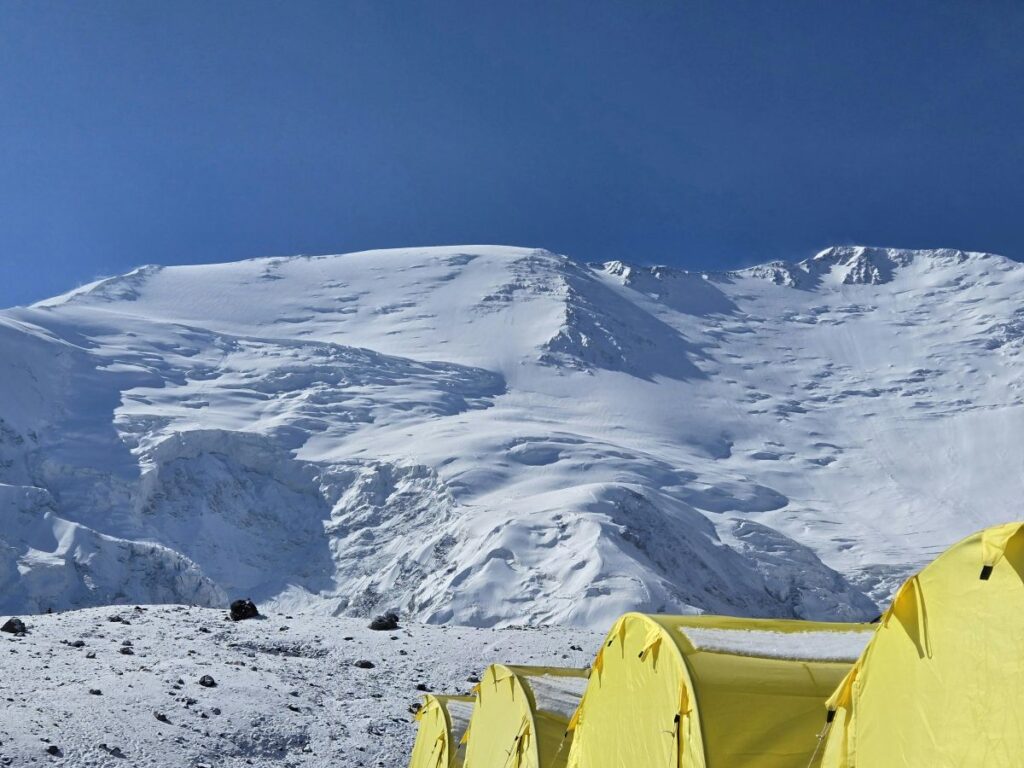
This entire journey is more than a trek it is an expedition, adventure, route, passage, and odyssey through one of the most legendary landscapes on Earth.
What Is the Cost of the Everest Base Camp Trek?
The Everest Base Camp trek cost (EBC trek price) varies depending on whether you choose a budget trekker, mid-range trek, or luxury EBC trek package. On average, the total trek cost depends on your travel style, services included, and level of comfort, making it one of the most flexible trekking budget Nepal experiences.
A typical affordable EBC trek includes several key cost categories such as flight cost (Lukla flight price), trekking permit fees, agency or guided trek cost, teahouse accommodation, meal cost on trail, porter fees, and guide salary. These are the core components of any EBC trek expenses breakdown.
Additional costs include gear and equipment cost, travel insurance, emergency evacuation insurance, and sometimes helicopter rescue cost, which is highly recommended for high-altitude trekking. Travelers must also account for Nepal visa fees, personal spending, and miscellaneous expenses along the route.
Depending on your style, you may choose a self-organized trek or an all-inclusive package offered by trekking agencies. A budget trekker can minimize costs by sharing rooms and meals in teahouses, while a luxury trek may include upgraded lodges, private guides, and premium services.
In general, the cost per day increases with altitude due to transportation and supply challenges in the Himalayas. Whether you see it as a price, fee, expense, or investment, the Everest Base Camp trek delivers unmatched value for a once-in-a-lifetime Himalayan adventure.
Cost Breakdown for the EBC
1. Flights
| Route | Budget | Mid-Range | Luxury |
|---|---|---|---|
| International flight to Kathmandu | $400–$700 | $700–$1,200 | $1,200–$2,500+ |
| Kathmandu ⇄ Lukla (return) | $180–$220 | $220–$280 | $300–$500 (helicopter) |
2. Permits & Documentation
| Permit | Cost (USD) |
|---|---|
| Sagarmatha National Park Entry Permit | $35 |
| Khumbu Pasang Lhamu Rural Municipality Permit | $20 |
| TIMS Card | $10–$20 |
| Total Permits | $65–$75 |
3. Trekking Packages / Agency Fees
| Package Type | Cost Per Person |
|---|---|
| Budget group trek | $800–$1,200 |
| Mid-range guided trek | $1,500–$2,500 |
| Luxury all-inclusive trek | $3,500–$6,000+ |
| Self-organized trek | $600–$900 |
4. Daily Costs on the Trail
Accommodation (Per Night)
| Style | Cost |
|---|---|
| Basic teahouse | $5–$15 |
| Mid-range lodge | $15–$35 |
| Luxury lodge | $50–$150 |
Food & Meals (Per Day)
| Type | Cost |
|---|---|
| Budget meals (dal bhat) | $15–$25 |
| Mid-range mix | $25–$40 |
| Luxury dining | $40–$70 |
Guide & Porter (Per Day)
| Service | Cost |
|---|---|
| Licensed guide | $25–$35 |
| Porter | $18–$25 |
| Guide + porter combo | $40–$60 |
5. Insurance & Emergency
| Type | Cost |
|---|---|
| Travel & trekking insurance | $80–$200 |
| High-altitude evacuation | $100–$300 |
| Helicopter rescue (if needed) | $3,000–$6,000 |
6. Nepal Visa Fees
| Duration | Cost |
|---|---|
| 15 days | $30 |
| 30 days | $50 |
| 90 days | $125 |
7. Total Estimated Budget
| Trek Style | Total Cost |
|---|---|
| Budget trekker | $1,200–$1,800 |
| Mid-range trekker | $2,000–$3,500 |
| Luxury trekker | $4,500–$8,000+ |
Confused about budget or planning your trek? Talk to our Everest Base Camp specialists on WhatsApp for exact cost & packages.
Everest Base Camp Trek Itinerary
The Everest Base Camp trek (EBC trek Nepal) follows a well-structured classic itinerary through the Khumbu Region trek inside Sagarmatha National Park, offering gradual ascent, proper acclimatization schedule, and a safe return via the same return route. This South Col trekking route is designed to help trekkers adjust to high altitude while experiencing the best of the Himalayas.
Day 1: Fly to Lukla (2,860 m) and Trek to Phakding (2,610 m)
The journey begins with a scenic flight to Lukla (Tenzing-Hillary Airport), the main gateway of the Everest region. From here, you start your walking trail through the Dudh Koshi Valley, descending gently to Phakding. This first day introduces you to the teahouse trekking system and Himalayan environment.
Day 2: Phakding to Namche Bazaar (3,440 m)
You enter deeper into the Khumbu Valley, crossing suspension bridges and entering Sagarmatha National Park. A steep climb leads to Namche Bazaar, the main acclimatization hub and cultural center of the Sherpa community.
Day 3: Acclimatization Day at Namche Bazaar
This is an important acclimatization rest day to adjust to high-altitude trekking conditions. You can hike to nearby viewpoints for panoramic Himalayan views of Everest, Lhotse, and Ama Dablam while reducing risk of AMS (Acute Mountain Sickness).
Day 4: Namche Bazaar to Tengboche (3,860 m)
The trail follows an alpine terrain with beautiful snow-capped mountains and rhododendron forests. You reach Tengboche Monastery, a spiritual highlight surrounded by Buddhist culture, prayer flags, and mani stones.
Day 5: Tengboche to Dingboche (4,410 m)
You move into higher remote terrain, entering the upper Khumbu region. The landscape becomes more rugged with glacial valleys and alpine wilderness, offering stunning views of Ama Dablam.
Day 6: Acclimatization Day at Dingboche
Another crucial acclimatization strategy day. Short hikes help your body adjust to thin air, low oxygen, and hypoxic conditions, preparing you for higher elevations.
Day 7: Dingboche to Lobuche (4,940 m)
The trail becomes more demanding as you enter the glacial moraine zone near the Khumbu Glacier. You pass memorials dedicated to climbers and experience the harsh beauty of the Himalayas.
Day 8: Lobuche to Gorak Shep (5,164 m) → Everest Base Camp (5,364 m)
This is the most anticipated day of the Everest Base Camp expedition journey. You trek across rocky terrain to Gorak Shep, then continue to Everest Base Camp, standing at 5,364 m / 17,598 ft on the edge of the Khumbu Icefall. You return to Gorak Shep for an overnight stay.
Day 9: Hike to Kala Patthar (5,545 m) and Trek Down to Pheriche (4,240 m)
Early morning hike to Kala Patthar, the highest viewpoint of the trek, offers the best panoramic Himalayan views of Mount Everest. After sunrise, you descend to Pheriche.
Day 10: Pheriche to Namche Bazaar
You retrace your steps back through familiar Himalayan villages, enjoying improved oxygen levels and easier trekking conditions during descent.
Day 11: Namche Bazaar to Lukla
Final trekking day through suspension bridges, forests, and river valleys, marking the completion of your Himalayan journey.
Day 12: Fly Back to Kathmandu from Lukla
A scenic flight takes you back to Kathmandu, concluding your once-in-a-lifetime Everest Base Camp trek experience.
Everest Base Camp Temperature and Weather
The Everest Base Camp temperature (EBC weather) is defined by extreme and rapidly changing high-altitude climate conditions in the Khumbu region of the Himalayas. Weather here plays a crucial role in determining the safety and success of the trek, making it essential to understand the seasonal weather EBC patterns before starting your journey.
The two main peak trekking seasons are spring (March–May) and autumn (September–November), which offer the most stable meteorological conditions, clear skies, and excellent visibility. These are considered the best time to visit EBC, with ideal trekking conditions and minimal trail disruptions. In contrast, the monsoon season (June–August) brings heavy rainfall, trail flooding, and low visibility, while winter (December–February) brings extreme cold and heavy snowfall, making trekking more challenging.
At Everest Base Camp, temperatures can drop drastically. Daytime temperatures may remain moderate in peak seasons, but nighttime temperatures often fall below freezing conditions, especially at higher elevations. Trekkers regularly face sub-zero temperatures, strong winds, and sharp temperature drops at altitude, intensified by wind chill factors and thin air.
Weather conditions can change quickly, ranging from clear skies and panoramic views to sudden snowstorms, blizzards, or heavy cloud cover. In lower visibility conditions, trekkers may encounter fog, snowfall, or even temporary trail closures.
Proper clothing is essential, including a layering system with down jackets, thermal base layers, insulated gloves, waterproof outer shells, trekking boots, gaiters, and UV-protective sunglasses. Protection from strong UV radiation and intense solar exposure is equally important due to thinner atmospheric filtering at altitude.
Temperature at Key Locations During Peak Season
| Location | Altitude | Avg Day Temp (Spring/Autumn) | Avg Night Temp |
|---|---|---|---|
| Lukla | 2,860 m | +10°C to +18°C | +2°C to +6°C |
| Namche Bazaar | 3,440 m | +7°C to +14°C | -2°C to +2°C |
| Tengboche | 3,860 m | +4°C to +10°C | -5°C to -2°C |
| Dingboche | 4,410 m | +2°C to +8°C | -8°C to -4°C |
| Lobuche | 4,940 m | -2°C to +5°C | -12°C to -8°C |
| Gorak Shep | 5,164 m | -4°C to +3°C | -15°C to -10°C |
| Everest Base Camp | 5,364 m | -5°C to +2°C | -18°C to -12°C |
| Kala Patthar | 5,545 m | -7°C to 0°C | -20°C to -15°C |
Everest Base Camp Trek FAQs
Why is Everest Base Camp famous?
The Everest Base Camp trek is famous because it offers a rare opportunity to experience panoramic Himalayan views, Sherpa culture, Buddhist heritage, and dramatic alpine landscapes in one journey. It is also the same route used by climbers preparing for Everest summit expeditions, making it a legendary Himalayan trail and bucket-list trek for adventure seekers worldwide.
How difficult is the Everest Base Camp trek?
The EBC trek is considered a moderate to challenging high-altitude trek. While it does not require technical climbing skills, trekkers must deal with long trekking days, steep ascents, rocky terrain, and low oxygen conditions (thin air and hypoxia). Proper acclimatization, physical fitness, and endurance training are essential to complete the trek safely.
What is the best time to do the Everest Base Camp trek?
The best time to trek Everest Base Camp is during the spring season (March–May) and autumn season (September–November). These periods offer stable weather conditions, clear skies, and excellent panoramic Himalayan views. Winter brings extreme cold and snow, while monsoon season has heavy rain and poor visibility.
What is the altitude of Everest Base Camp?
The Everest Base Camp altitude is 5,364 metres (17,598 feet) above sea level. Trekkers experience increasing elevation gain, reduced oxygen levels, and high-altitude conditions as they move through the Khumbu Valley. Proper acclimatization is necessary to prevent altitude sickness (AMS).
How long does the Everest Base Camp trek take?
The classic Everest Base Camp trek takes around 12–14 days, depending on the itinerary and acclimatization schedule. Some shorter versions may take 10–11 days, while longer itineraries include extra rest days for safer altitude adjustment.
Do I need permits for the Everest Base Camp trek?
Yes, trekkers need several permits, including the Sagarmatha National Park Entry Permit, TIMS Card, and Khumbu Pasang Lhamu Rural Municipality Permit. These permits are mandatory for trekking in the Khumbu Region of Nepal.
Can beginners do the Everest Base Camp trek?
Yes, beginners can complete the Everest Base Camp trek if they are physically fit and properly prepared. It is a non-technical trekking route, meaning no mountaineering experience is required. However, beginners should focus on cardio training, endurance building, and altitude preparation before the trek.
What kind of accommodation is available on the trek?
Accommodation along the Everest Base Camp route consists of teahouse lodges run by local Sherpa families. These provide basic but comfortable facilities including meals, shared rooms, and warm hospitality in the Himalayan community villages.
Send Us Inquiry