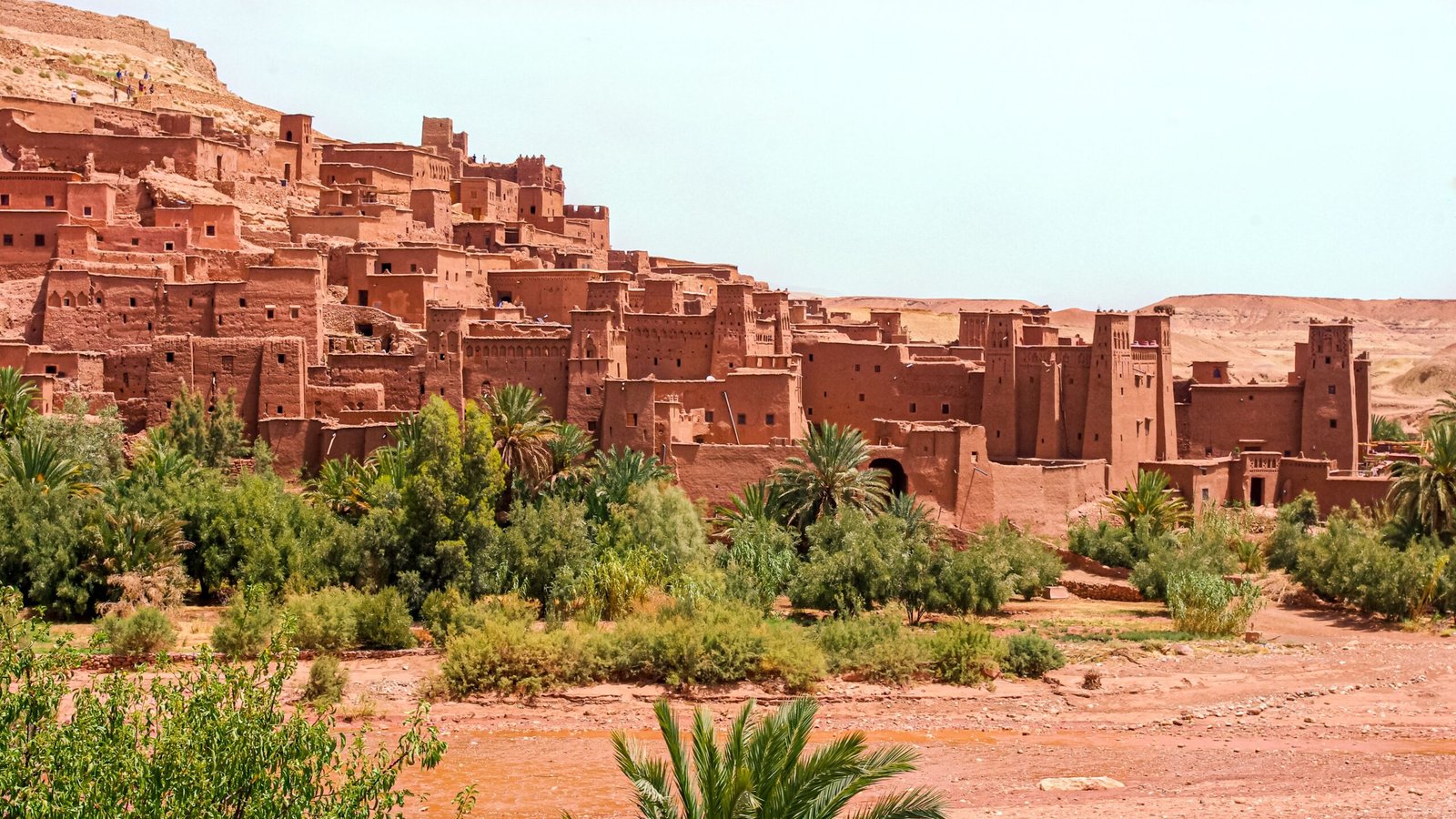
Ask ten people when to visit the Sahara and nine will tell you “spring or autumn.” That’s not wrong, exactly — it’s just too vague to actually plan around. I’ve led groups into Erg Chebbi in July heat and in January cold, and the difference between a good trip and a great one usually comes down to what’s happening that particular month, not what season it technically falls under. Temperature swings, wind patterns, and how many other travelers are camped next to you all shift on a monthly basis, sometimes even week to week.
So instead of the usual “spring or fall” answer, here’s what actually changes month to month in the desert around Merzouga and Zagora, and how to use that to pick your own window.
1. Overnight vs. Daytime Temperatures, Month by Month
The Sahara’s daily temperature swing is the first thing that surprises first-time visitors. In summer (June through August), daytime highs at Merzouga regularly climb past 40°C, sometimes touching 45°C in the open dunes but nights only cool to around 24-26°C, so there’s no real relief once the sun goes down. That’s the trade-off with summer: dramatic dunes and near-empty camps, but genuinely uncomfortable heat for anyone not used to it.
Move into autumn (September to November) and the swing becomes more dramatic in the other direction: daytime highs settle into a much more livable 25-32°C, but nights start dropping fast, down to 10-15°C by November. Winter (December to February) pushes that further — mild, sunny days around 18-22°C, but desert nights that can fall to near freezing, sometimes 0-5°C in camp. Spring (March to May) warms back up gradually, with days climbing through the high 20s and nights holding around 12-16°C. None of this shows up if you just search “Sahara weather” and see an average — the averages hide exactly the swings that matter for what you pack and how you plan your day.
2. Midday Heat Swings
Desert heat behaves differently than the heat you feel walking through the Marrakech medina or a coastal town like Essaouira. It’s dry heat with almost no humidity buffer, so it hits harder in direct sun and drops off faster the moment you’re in shade or moving after dusk. Even in the “comfortable” months like October or April, midday sun on open sand can feel 8-10 degrees hotter than the air temperature reading would suggest, simply because there’s no cloud cover and the sand itself radiates heat back up.
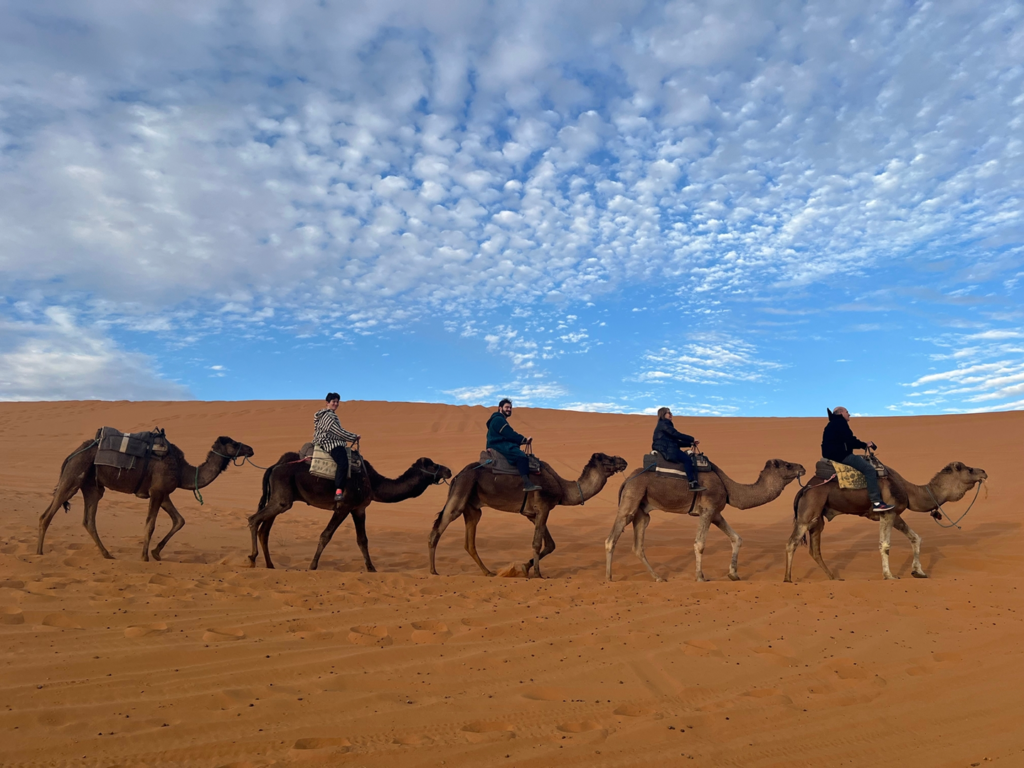
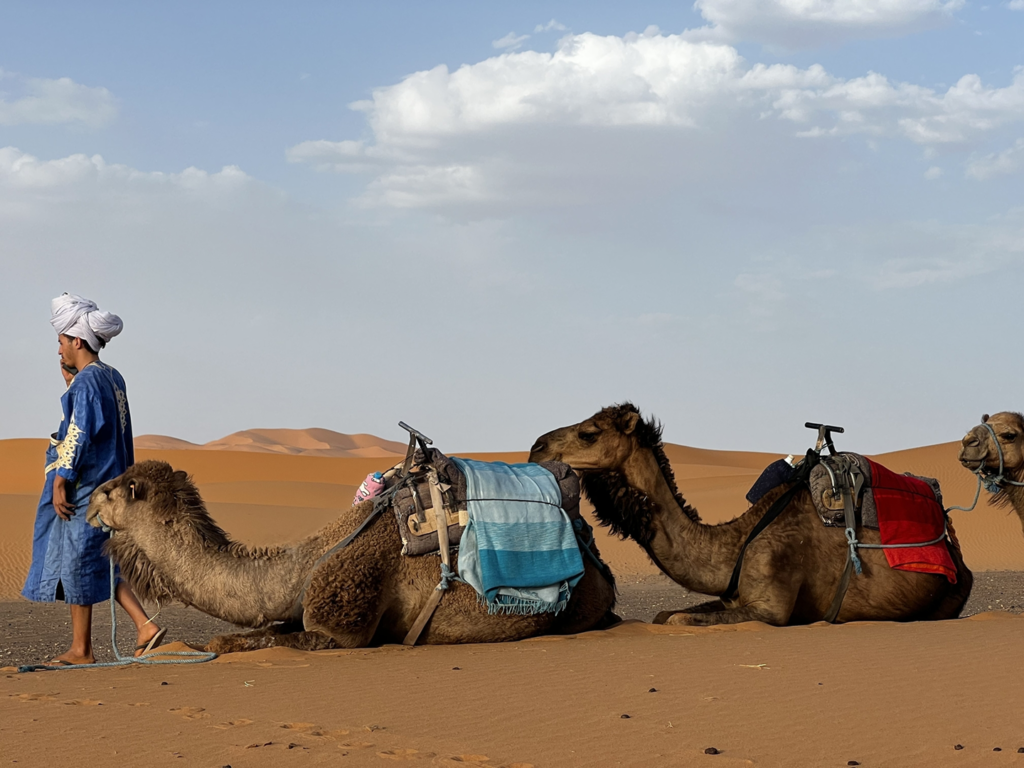
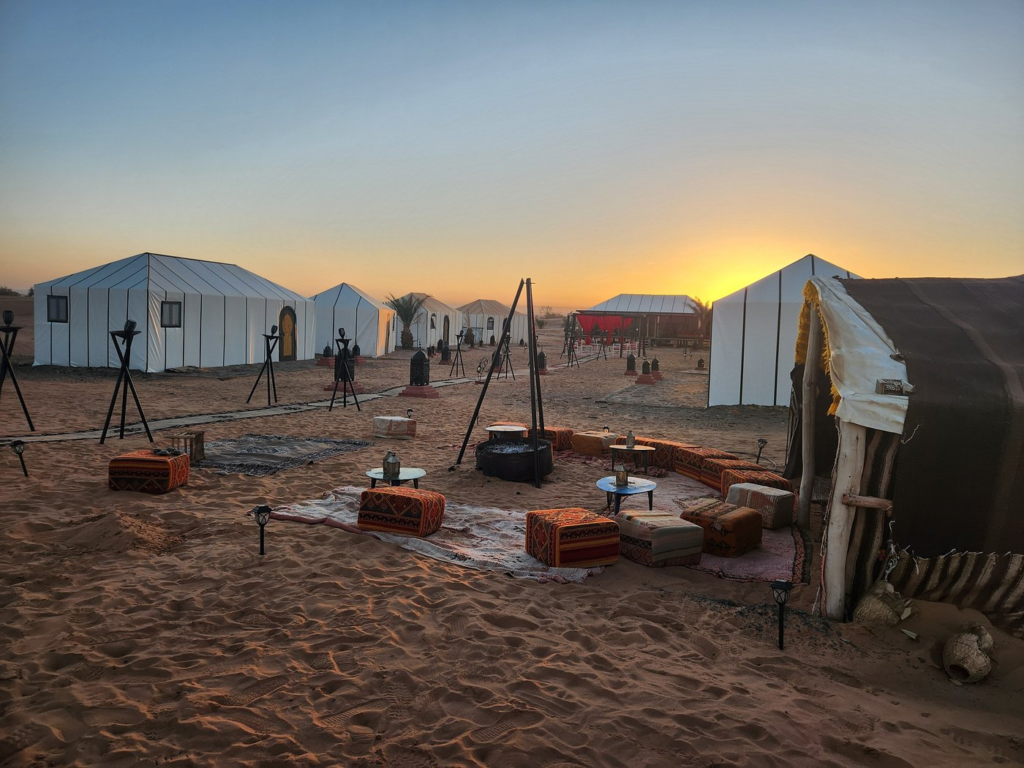
That’s why every desert camp worth its salt schedules around it rather than against it. Camel treks into the dunes go out in the late afternoon, close to sunset, or early morning before the heat builds — never at midday, even in the “mild” months. If an itinerary has you riding camels at noon in July, that’s a sign the operator hasn’t adjusted for the season. Midday during the hotter months is built-in rest time at the camp instead, usually the best time for tea, shade, and waiting out the worst of it before the evening activities start.
3. Wind and Sandstorm Risk Windows
This is the part most travel guides skip entirely, and it’s worth being honest about. The Sahara does get sandstorm-prone winds locally called the “chergui” and they’re more common in spring, particularly March through May, than at any other time of year. They’re not a daily occurrence and not usually dangerous, but a strong chergui day means reduced visibility, sand in everything, and camel treks sometimes rerouted or shortened.
Outside of spring, the risk drops off considerably. Winter months are generally the calmest and clearest, which is part of why winter nights under a completely unclouded sky are one of the most underrated reasons to visit then despite the cold. If your trip dates are flexible and you’re specifically chasing still air and clear stargazing, that points toward December-February over the spring shoulder season, even though spring wins on daytime temperature.
4. How This Maps to Crowd Levels at Merzouga and Zagora
Here’s where the weather patterns and the crowd patterns line up almost exactly. The shoulder months October-November and March-early April have the best combination of daytime and nighttime temperatures, and unsurprisingly, they’re also when Merzouga and Zagora camps are fullest. Book a shoulder-season desert camp without planning ahead and you may find your first-choice camp sold out weeks in advance, especially around long weekends.
The quieter alternative is exactly what you’d expect: deep summer (June-August) is the least crowded because of the heat, and January-February is quiet outside of the Christmas/New Year rush, despite genuinely nice, clear, cold-but-sunny days.
If a smaller, quieter camp matters more to you than the absolute best weather window, January and February are worth serious consideration you trade a few cold hours after sunset for camps that aren’t fully booked out and a much more personal experience with your guide.
5. So, Which Month Should You Actually Pick?
For first-time visitors and photographers who want the dunes at their most photogenic with manageable weather, October-November or March-early April are the safest bets this breakdown of the best time to visit Morocco overall lines up well with those same windows for the rest of the country too, so it’s easy to combine a desert leg with Marrakech or the Atlas without fighting opposite weather patterns.
If you’d rather avoid the crowds than chase the “perfect” weather, aim for January-February and pack real layers for the nights, or push into early June/late September as an edge case between the shoulder season and the extremes. What you should actually avoid, unless you specifically want the challenge and the empty dunes that come with it, is the deep summer heat of July-August. For a closer look at how these patterns play out specifically around Merzouga and the Erg Chebbi dunes, including camp-specific notes, that’s worth a read before you lock in dates.
About the author:
Mohamed Jazouli (Moha) is the founder of AZA Morocco Tours, based in Marrakech. He started out planning trips for other guides before moving into fieldwork himself, and now leads desert and Atlas Mountains tours in person.
Read Related Posts
A Taste of Asia: Eating Your Way Through Japan
Manaslu Expedition Autumn 2026 – September to November Booking