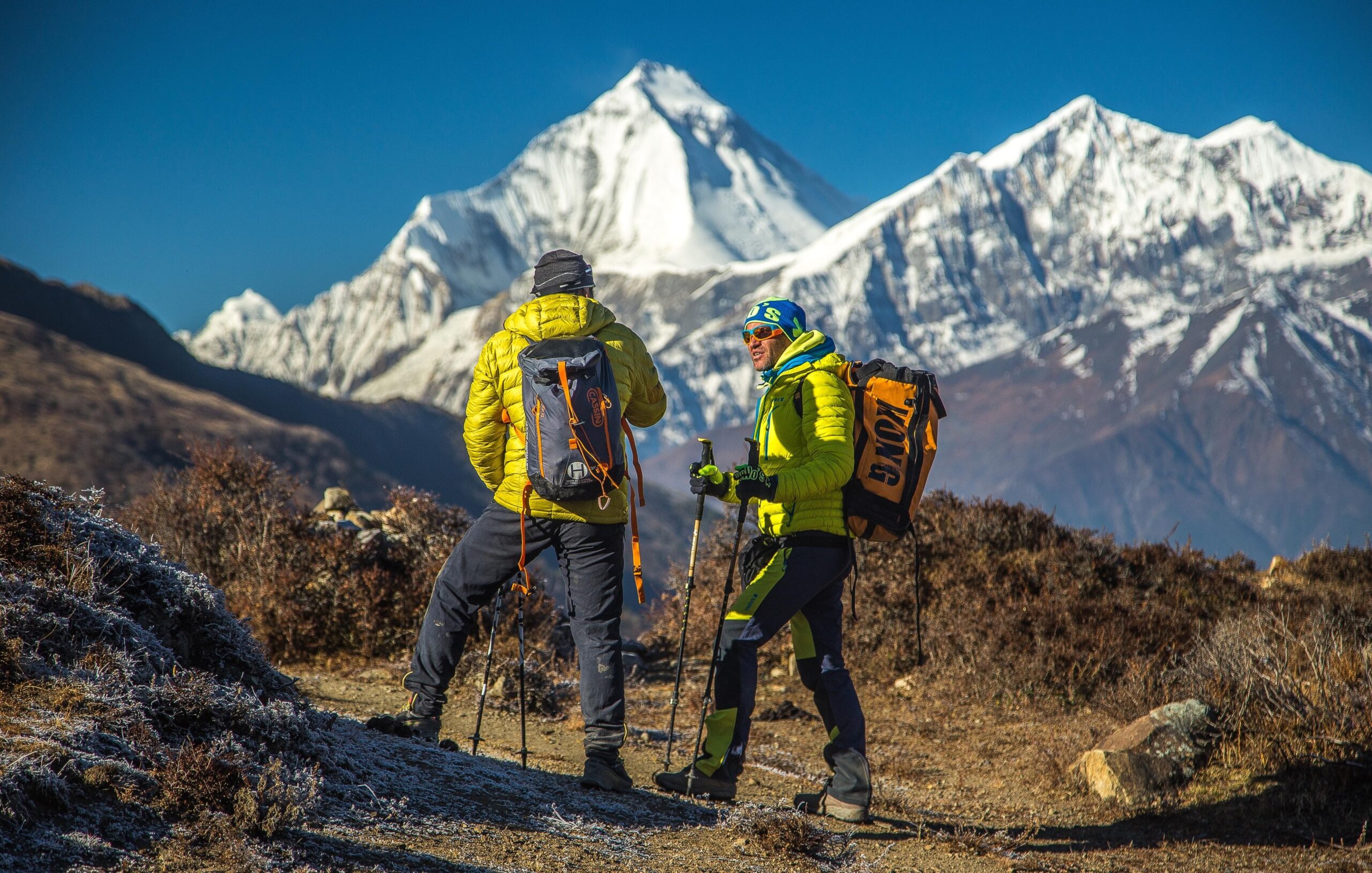
Have you ever looked up at a mountain and thought, “What if I actually climbed that?”
Now picture the biggest mountain on Earth. Mount Everest. Standing at 8,848.86 meters above sea level. The highest point any human being can stand on this planet.
Spring 2027 is shaping up to be one of the most supported and well-organized Everest climbing seasons ever. If you have been thinking about joining an expedition, this is your year to stop thinking and start preparing.
In this blog, we are going to walk you through every reason why the Spring 2027 season is special, what makes it different from other years, and what you need to know before you take your first step toward the summit.
Let’s get into it.
Spring Is the Best Season to Climb Mount Everest
Before we talk about 2027 specifically, you need to understand one basic fact: not all seasons are equal on Everest.
Climbers can only attempt the summit during two narrow windows each year. Spring runs from April to May, and autumn runs from September to October. Every other time of year, the mountain is simply too dangerous.
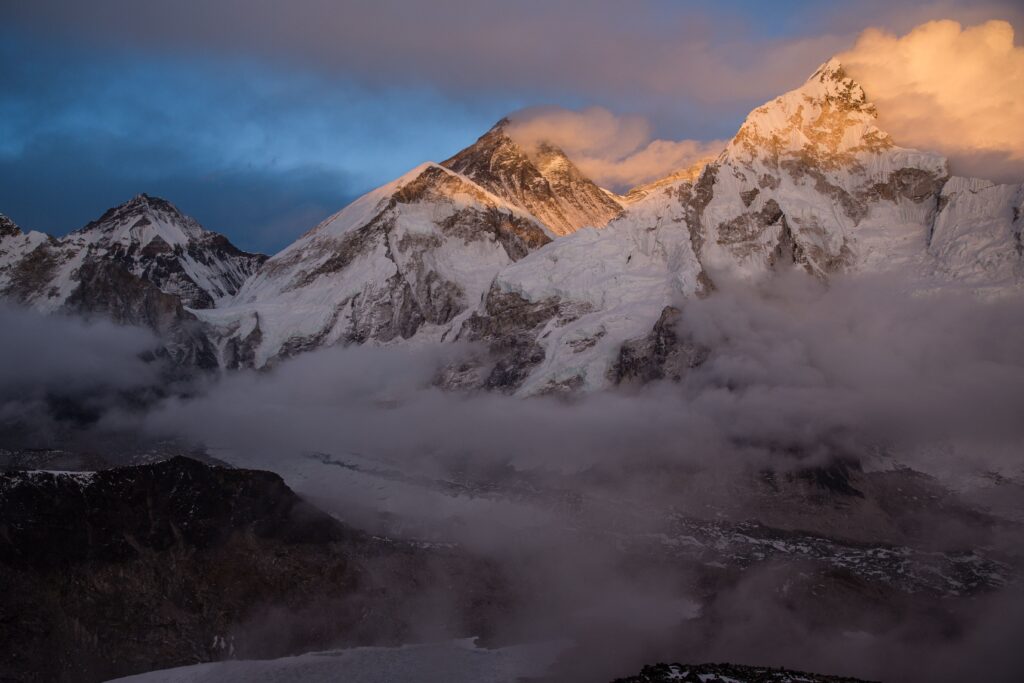
Winter brings wind speeds that can exceed 200 kilometers per hour at the summit. The monsoon season from June to August floods the mountain with heavy snowfall and zero visibility. Neither season gives you a realistic chance at a successful summit.
Spring, however, is different.
Why April and May Give You the Best Chance at the Summit
During spring, something remarkable happens in the upper atmosphere above Nepal. The jet stream, a powerful band of fast-moving winds that normally hammers the upper sections of Everest, shifts northward. This shift creates short but precious weather windows when the winds calm down and the skies clear up.
These windows typically appear in mid to late May, and experienced expedition teams plan their entire schedule around them.
During spring, you also get longer daylight hours, slightly warmer temperatures compared to winter, and clearer skies that allow you to see the route ahead. The Khumbu region comes fully alive with operating tea houses, well-maintained trails, and local communities that welcome climbers with open arms.
The spring 2027 season spans from early April through late May. You trek in during April, you acclimatize, you run your rotations through the high camps, and you position yourself for a summit push when that weather window appears in May.
This is the proven system that has put thousands of climbers on the summit since 1953.
The Spring 2027 Season Is One of the Most Supported in Recent History
Here is what makes 2027 stand out from previous years.
The infrastructure, technology, and professional support available to climbers on Everest has never been stronger. Expedition operators have spent years refining their systems, and the Spring 2027 season is the direct result of all that experience coming together.
You Get Real-Time Weather Forecasts Updated Every Six Hours
Timing a summit push on Everest used to involve a lot of guesswork. Teams would watch the sky, consult basic forecasts, and hope for the best.
That approach no longer exists for serious expeditions.
In Spring 2027, dedicated high-altitude weather services will provide updated forecasts every six hours specifically for the Everest summit region. Your expedition leader will monitor these forecasts continuously and will only give the green light for your summit push when a confirmed 48-hour stable weather window appears.
This single advancement changes everything. You do not rush the mountain. You wait for the right moment, and then you move with confidence.
The Route Gets Prepared and Maintained by Professional Teams
Every spring, a specialized team called the Icefall Doctors goes to work on the Khumbu Icefall, which is one of the most unpredictable and dangerous sections of the South Col Route. They install ladders over crevasses, fix ropes through the shifting glacier, and check the route continuously throughout the season.
Without these professionals, moving through the Icefall would be nearly impossible. With them, you have a managed path that gets safer and more efficient as the season progresses.
Above the Icefall, Sherpa teams fix ropes from Base Camp all the way to the summit. These ropes run through the Western Cwm, up the Lhotse Face, across the South Col, and along the Southeast Ridge to the very top. You clip your safety system to these ropes and climb knowing that your team has secured the route ahead of you.
A 1:1 Sherpa to Climber Ratio Gives You Maximum Safety
The best expedition operators running the Spring 2027 season are offering a 1:1 Sherpa to climber ratio. This means you have a dedicated, experienced high-altitude climbing Sherpa by your side from the moment you start climbing to the moment you return safely.
Your personal Sherpa does not just carry gear. They monitor your condition, guide your movement on technical sections, help you manage your oxygen system, and make judgment calls when the mountain throws unexpected conditions at you.
This level of support dramatically increases both your safety margin and your summit success rate.
You Follow the Most Tested Route on Earth
The South Col Route from the Nepal side is the route that Sir Edmund Hillary and Tenzing Norgay used when they made the first-ever summit of Everest on May 29, 1953. Seventy-four years later, it remains the most commonly used and most thoroughly understood route on the mountain.
This does not mean it is easy. Far from it. But it does mean that every challenge you will face on this route is known, mapped, and prepared for.
The Journey from Base Camp to the Summit
You start at Everest Base Camp at 5,364 meters. From there, the route takes you through four high camps before you reach the summit.
The Khumbu Icefall sits between Base Camp and Camp I at approximately 6,065 meters. This is a 600-meter section of moving glacier filled with massive ice blocks called seracs, hidden crevasses, and constantly shifting terrain. Crossing it is the most objectively dangerous part of the climb. Expedition teams time all Icefall crossings to happen between 2 AM and 5 AM when the cold temperatures keep the ice more stable.
The Western Cwm connects Camp I to Camp II at 6,500 meters. This section is a relatively flat glacial valley, but the high altitude and intense sun reflecting off the snow make it physically punishing. You will spend a lot of time on this section during your acclimatization rotations.
The Lhotse Face rises from Camp II to Camp III at 7,100 meters. This is a steep, 1,125-meter wall of blue ice that you climb on fixed ropes using crampons and ice axes. It is technically demanding and physically exhausting at altitude.
Camp IV on the South Col sits at 7,900 meters. This is your launching point for the summit push. From here, you enter the Death Zone, where oxygen levels drop so low that the human body cannot acclimatize no matter how much time you spend there.
The Summit Push takes you from Camp IV through the Balcony at 8,400 meters, the South Summit at 8,748 meters, the famous Hillary Step, and finally onto the summit plateau at 8,848.86 meters. A typical summit push takes between 10 and 18 hours for the round trip.
Supplemental oxygen starts at Camp III and flows continuously through your summit push and descent. A well-organized expedition will provide you with multiple oxygen cylinders, a properly fitted mask, and a regulator calibrated for high-altitude use.
Acclimatization Is the Strategy That Gets You to the Top
You cannot rush altitude. The human body needs time to adjust to the reduced oxygen levels as you climb higher. Skip this process, and you face serious altitude sickness, pulmonary edema, cerebral edema, or worse.
The Spring 2027 expeditions are built around smart, thorough acclimatization schedules.
The Rotation System That Prepares Your Body
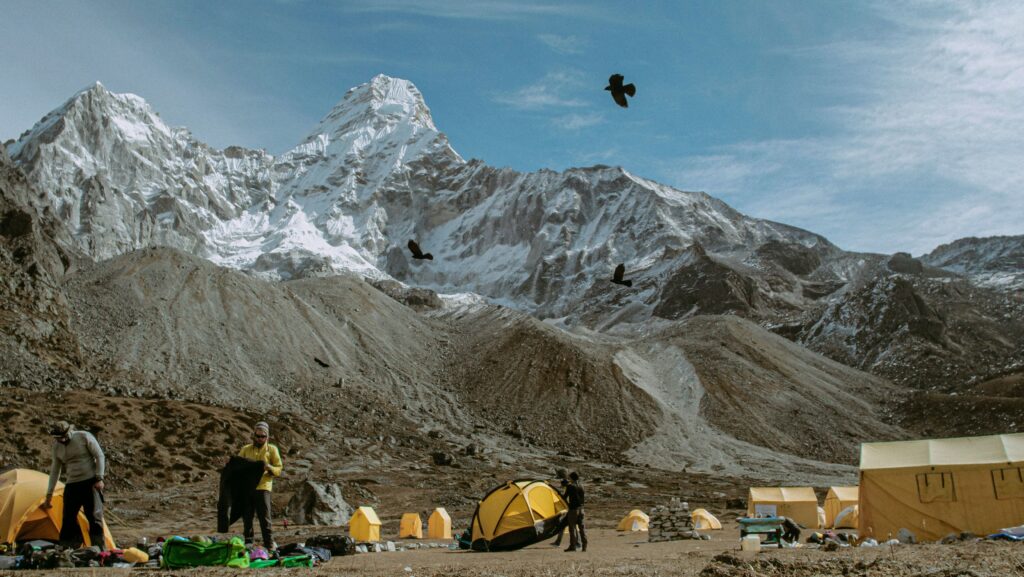
Professional expeditions use a rotation system where you climb to a high camp and then descend back to Base Camp to rest. You repeat this process multiple times, going a little higher with each rotation before returning to lower altitude.
This repeated exposure to altitude triggers changes in your blood and breathing that help your body function better with less oxygen. By the time you make your final summit push, your body has already experienced the conditions it will face at 8,000 meters and above.
Most Spring 2027 expeditions include two or three full rotations through the high camps before the summit push begins.
Pre-Summit Climbs Warm Up Your Body and Mind
Many Spring 2027 expeditions also include an ascent of Lobuche East at 6,119 meters as part of the acclimatization process. This climb gives you real high-altitude climbing experience on technical terrain before you ever step into the Khumbu Icefall.
You practice using crampons and ice axes. You get comfortable moving on fixed ropes. You test your gear at altitude. And you build the confidence that comes from knowing you have already stood on a serious mountain.
You Get Round-the-Clock Medical Support at Base Camp
Health management at altitude is not something you want to figure out on the go. Serious expeditions in 2027 station a qualified expedition doctor at Base Camp for the entire climbing season.
Your oxygen saturation levels get checked daily. Your doctor monitors for early signs of altitude-related illness and acts quickly if something looks wrong. A Hyperbaric Chamber Bag stays on standby at Base Camp to treat acute mountain sickness by simulating a lower-altitude environment.
Helicopter evacuation options are also available throughout the season for emergencies that require getting a climber down quickly.
You are not out there alone. A full medical safety net supports every step of your climb.
The Trek to Base Camp Is a Remarkable Journey by Itself
The Everest expedition does not start on the mountain. It starts in Kathmandu, the capital of Nepal, and continues through one of the most breathtaking trekking routes in the world.
From Kathmandu to Lukla
You fly from Kathmandu to Lukla, a small mountain airstrip that serves as the starting point for all Everest region treks. The flight itself is extraordinary, offering you views of the Himalayan range from the air that few people in the world ever see.
From Lukla, you walk. Over nine to ten days, you trek through Sherpa villages, ancient monasteries, rhododendron forests, and high river valleys. You pass through Namche Bazaar, a lively trading town at 3,440 meters that serves as the economic hub of the Khumbu region.
Along the way, you see Ama Dablam, Pumori, Nuptse, and other world-class peaks rising around you. The Mahalangur Himal range surrounds you on all sides. By the time you reach Base Camp, you understand exactly where you are and why this place draws people from every corner of the world.
You Connect with the Sherpa Culture That Defines This Mountain
No discussion of Everest is complete without talking about the Sherpa people. These are the communities that have lived in the shadow of Everest for centuries, and their knowledge, skill, and cultural connection to the mountain are unlike anything you will find anywhere else.
The People Who Make Every Summit Possible
Sherpas are sometimes called the Tigers of Snow because of their extraordinary ability to work and move at high altitudes. Their bodies have adapted over generations to life in the thin air of the Khumbu region. At 8,000 meters, where most climbers are barely holding themselves together, experienced Sherpas continue to move with strength and precision.
Your climbing Sherpa is not just a guide. They are your partner on the mountain. They know every section of the route from years of experience. They carry gear to high camps so you can conserve your energy for the summit push. They stay by your side when conditions get difficult.
The Puja Ceremony Marks the Start of Your Climb
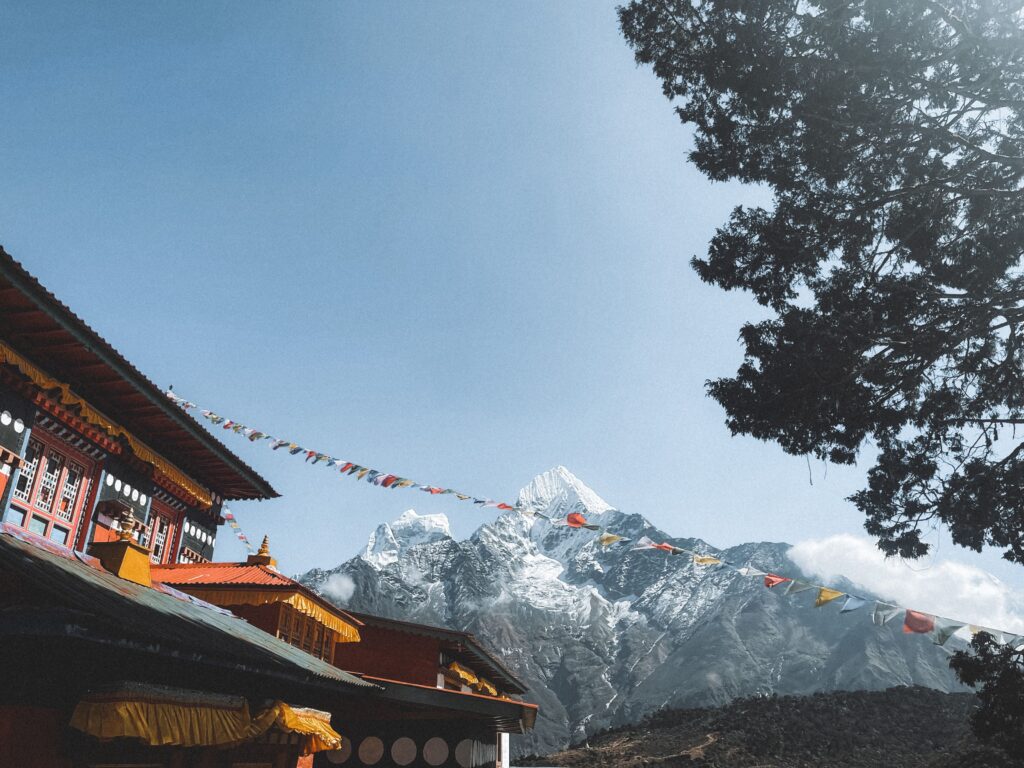
Before any climbing begins, every expedition holds a traditional Puja ceremony at Base Camp. This ceremony asks the mountain for permission and safe passage. A Lama leads the prayers, prayer flags get strung from a stone altar, and the entire team gathers together for what many climbers describe as one of the most moving experiences of the entire expedition.
Whether or not you share the Buddhist faith, the Puja connects you to the mountain in a way that goes beyond sport or achievement. It reminds you that Everest is more than a peak. It is Sagarmatha to the Nepali people and Chomolungma to the Sherpa and Tibetan communities. You are a guest on sacred ground.
Who Should Join the Spring 2027 Expedition?
Let us be completely honest here. Everest is not for everyone, and a responsible expedition operator will tell you that clearly.
You need genuine experience at high altitude before you apply for any reputable Spring 2027 expedition. The general standard in the industry requires that you have successfully climbed mountains of at least 6,000 meters and ideally 7,000 meters before you attempt Everest.
Good peaks to build experience on include Mera Peak at 6,476 meters, Island Peak at 6,189 meters, and Baruntse at 7,129 meters. All of these sit in the Everest region and give you real conditions to prepare in.
Beyond altitude experience, you need strong cardiovascular fitness. You need to train for months before the expedition, building endurance through running, hiking with a heavy pack, and strength training. You need to carry an oxygen cylinder and a large backpack while climbing at 8,000 meters. Your body needs to be ready for that demand.
You also need the right mental approach. Everest tests your patience more than anything else. You spend weeks waiting at Base Camp for the right conditions. You turn around if the weather goes bad, even when the summit feels close. You trust your team’s judgment over your own ambition when the two come into conflict.
The climbers who succeed on Everest are not necessarily the strongest or the most experienced. They are the ones who combine preparation with patience, ambition with judgment, and individual drive with genuine teamwork.
What a Full-Service Spring 2027 Expedition Package Covers
When you join a reputable Spring 2027 Everest expedition, your package typically covers a substantial list of services and logistics that would be impossible to manage on your own.
Permits and official fees include your Nepal Climbing Royalty permit, Icefall access fees, and all SPCC charges. Permit costs alone represent a significant investment, and a good operator handles all of this for you.
Accommodation and food cover your stay in Kathmandu, all meals during the trek to Base Camp, and full board at Base Camp for the duration of the expedition. Operators with helicopter supply lines bring fresh vegetables, meat, and supplies to Base Camp regularly throughout the season.
High-camp infrastructure includes all tents, sleeping equipment, and cooking facilities at Camp I, Camp II, and above. You arrive at each camp to find it stocked and ready.
Oxygen systems provide you with multiple 4-liter cylinders, a personally fitted summit mask, and a regulator. Oxygen flow begins at Camp III and continues through your summit attempt and descent.
Transportation covers all logistics from Kathmandu, including the flight to Lukla or Ramechhap and all ground transport.
Technical support includes the Sherpa teams who fix ropes on the mountain, your personal climbing Sherpa throughout the expedition, and Base Camp staff who manage communications, logistics, and day-to-day operations.
What you typically arrange yourself includes international flights, personal climbing gear, summit bonuses for your Sherpa team, and personal expenses during your time in Kathmandu.
Why Does This Expedition Changes You?
People who have climbed Everest often struggle to describe what it does to them. They talk about it as a before-and-after moment in their lives. Not just because of the summit, but because of everything that leads up to it.
The months of training teach you what your body is capable of when you push it consistently. The weeks at altitude teach you patience and the ability to live with uncertainty. The teamwork required on the mountain teaches you to trust other people in a way that daily life rarely demands.
You also face yourself honestly on Everest. There is no distraction at 8,000 meters. There is only you, your breath, the rope in front of you, and the decision you need to make right now. People consistently report that this clarity stays with them long after they come home.
And if you do reach the summit, you stand at 8,848.86 meters above sea level and look out at a horizon that curves with the shape of the Earth. Climbers say the world looks different from up there. Not smaller. Larger. And you understand, in a way that no photograph or story can prepare you for, that you are part of something much bigger than yourself.
How to Start Preparing for an Everest Expedition in Spring 2027 Right Now
The Spring 2027 Everest season is closer than it feels. Expedition operators are already taking applications, and spots on small-team expeditions fill up quickly because reputable operators cap their groups at six to eight climbers to maintain quality and safety standards.
Here is what you should do today:
Assess your experience honestly. Have you climbed above 6,000 meters? If not, start planning those smaller expeditions now. The 2025 and 2026 seasons are your training ground.
Start your fitness program. Six months of consistent cardiovascular training is a minimum. A year is better. Find a training plan designed for high-altitude mountaineering and follow it seriously.
Research expedition operators carefully. Look at their track record, their summit success rates, the size of their teams, their Sherpa ratios, and what their past climbers say about the experience. Choose a team you trust with your life because that is exactly what you are doing.
Book early. Premium operators with strong safety records and small team sizes have limited availability. The best spots for Spring 2027 are going quickly.
Get the right gear. High-altitude mountaineering requires specialized equipment. A good operator will give you a gear list well in advance. Take it seriously and invest in quality.
Have questions about joining the Spring 2027 Everest Expedition? Drop them in the comments below. We read every single one.
Read Related Blogs
Manaslu Expedition Autumn 2026 – September to November Booking
Leave a Reply