
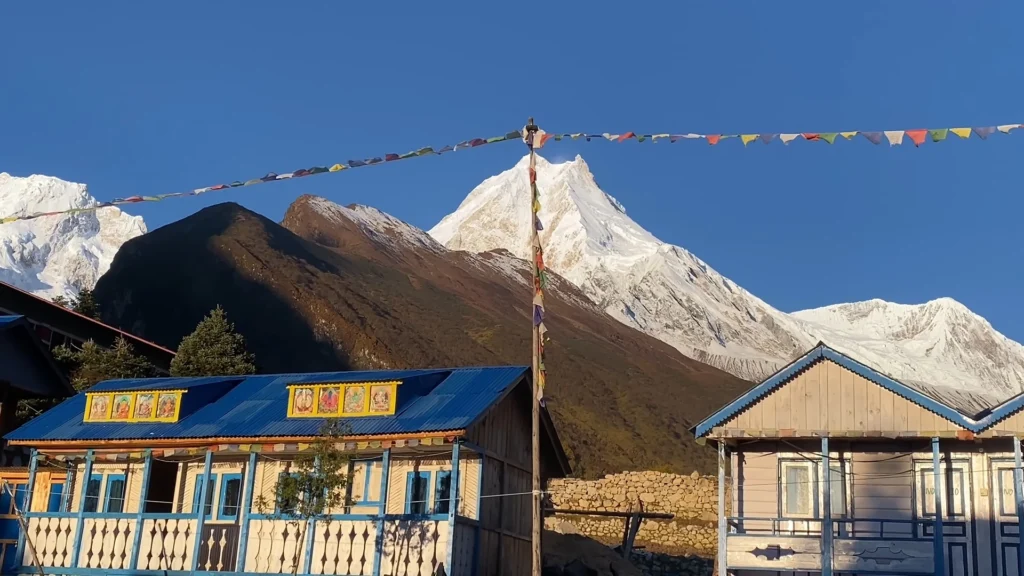
Mount Manaslu is one of the most respected mountains in the Nepalese Himalayas powerful, remote, and deeply tied to local culture. Unlike Everest, Manaslu does not feel commercial. Life here still follows seasonal rhythms, ancient trade routes, and Tibetan Buddhist traditions. It matters because it still feels untouched.
The name comes from the Sanskrit word Manasa, meaning intellect or soul. For local communities, this is not just a mountain. It is a protector, a water source, and a spiritual landmark that shapes daily life across the Budhi Gandaki valley.
Table of Contents
Where Is Mount Manaslu Located?
Mount Manaslu sits in west-central Nepal, inside Gorkha District, within the Mansiri Himal range close to the border with Tibet (China). On a map of Nepal, it falls roughly in the middle of the country, slightly toward the west tucked between the Annapurna region to the west and Langtang to the east.
The simplest way to picture it: Manaslu rises north of Gorkha town, and the Budhi Gandaki River carves through its main trekking valley in deep, dramatic gorges. Tibetan-influenced villages line the northern stretches, while Hindu hill settlements cluster further south. This makes Manaslu a natural crossroads between Himalayan ecosystems and cultures one of the few places where those two worlds visibly overlap.
How High Is Mount Manaslu?
Mount Manaslu stands at 8,163 meters (26,781 feet), making it the eighth-highest mountain in the world. Above 8,000 meters, climbers enter what is known as the death zone an altitude where the body cannot recover properly, even at rest. Oxygen levels drop sharply. Exhaustion sets in during even the simplest movements.
Because of this, Manaslu demands careful, patient planning. Climbers typically spend several weeks acclimatizing across lower camps before any summit attempt. Sudden storms, brutal winds, and temperature swings can arrive with little warning, compressing the safe climbing window to just days.
Avalanche Risk on Manaslu
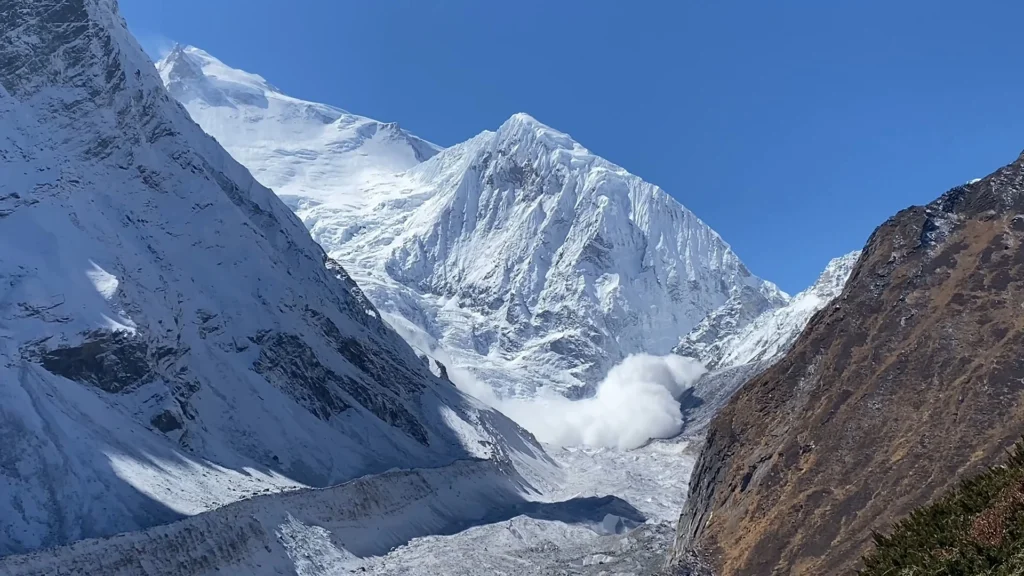
Manaslu is known for heavy snowfall, especially during the spring climbing season. That snowfall creates stunning scenery and serious danger.
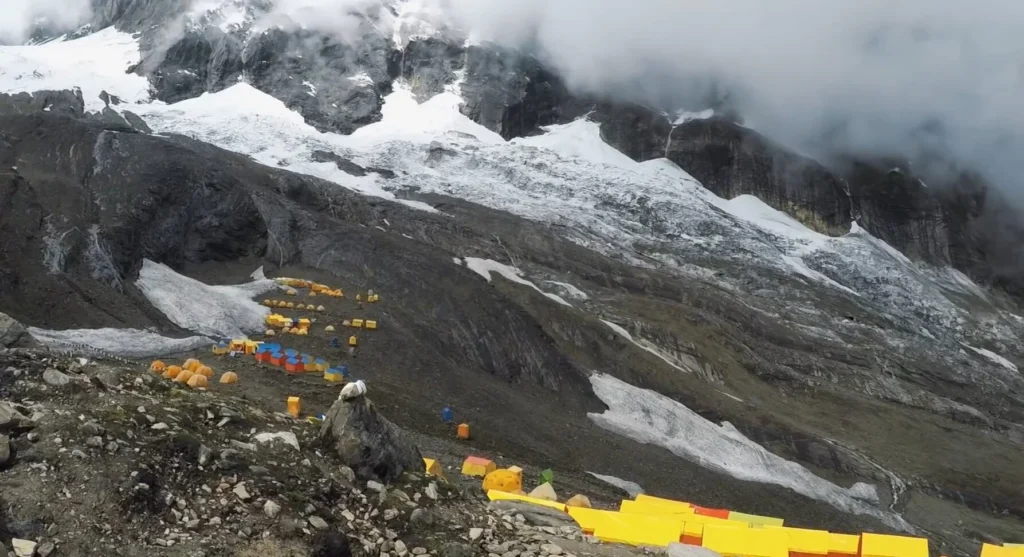
In September 2012, a massive avalanche swept through base camp and Camp 3, killing eleven climbers and injuring others. It remains one of the deadliest single incidents in Himalayan climbing history. Steep slopes and unstable snow layers are a persistent hazard throughout the mountain, and conditions can shift overnight. This is not an “easy” 8,000-meter peak. Climbers rely heavily on Sherpa expertise and careful, conservative decision-making to navigate it safely.
Mount Manaslu Base Camp
Base camp sits at approximately 4,800 meters above sea level, above the village of Samagaun one of the largest settlements in the Budhi Gandaki valley. The walk from Samagaun to base camp passes yak pastures, glacial streams, and wide alpine terrain that opens slowly into views of the mountain’s southern face.
Unlike Everest Base Camp, Manaslu Base Camp is quiet. No permanent lodges. Tents appear only during climbing seasons. Trekkers sometimes visit as a side trip from the main circuit; climbers use it as their operational hub for weeks at a time.
The Manaslu Circuit Trek
The Manaslu Circuit Trek is one of Nepal’s finest long-distance routes. It circles the entire mountain and crosses the Larkya La Pass at 5,160 meters high, cold crossing with sweeping views of surrounding peaks.
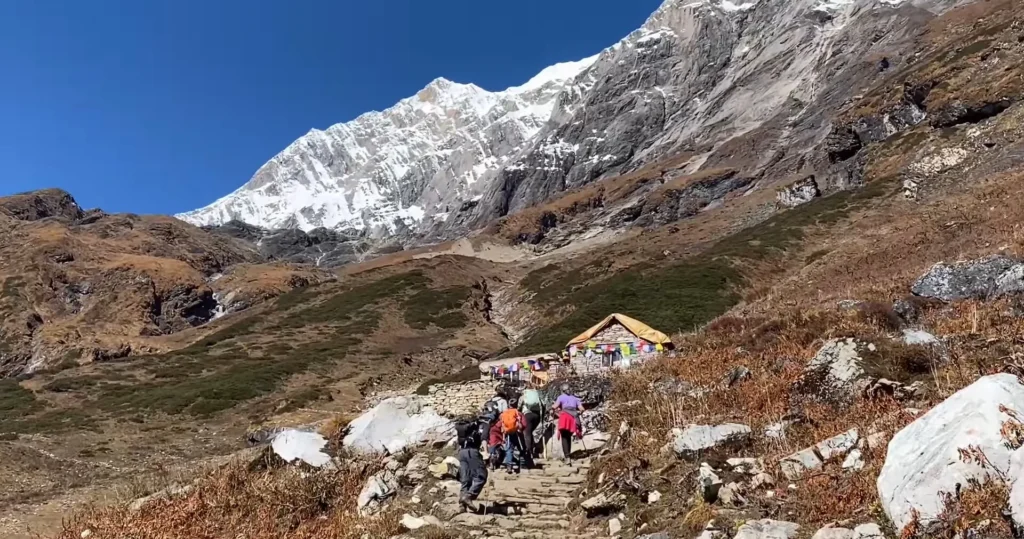
What makes this trek stand apart is the landscape it moves through. Trails climb through rice terraces and dense subtropical forests, then narrow into gorges before opening into broad alpine valleys. Villages like Jagat, Deng, Samagaun, and Samdo preserve Tibetan-style architecture, working monasteries, and traditions that have changed little over centuries. In Samagaun, the monastery above the village performs blessing ceremonies for climbers before each expedition season a reminder that the mountain’s spiritual significance is still very much alive.
Because the Manaslu region is a restricted trekking area, visitors need permits and must travel with a licensed guide. This regulation is one of the main reasons trails here remain uncrowded even in peak season, and why the culture feels genuine rather than performed for tourism.
Key Facts at a Glance
- Height: 8,163 m (26,781 ft) 8th highest mountain in the world
- Location: Gorkha District, west-central Nepal
- First ascent: 1956, by Toshio Imanishi and Gyalzen Norbu (Japanese expedition)
- Nickname: “The Japanese Mountain” due to the many Japanese expeditions that defined early climbing history here
- Trekking route: Manaslu Circuit, crossing Larkya La Pass (5,160 m)
- Base camp elevation: ~4,800 m
- Wildlife: Snow leopards, blue sheep, musk deer, Himalayan tahr, and over 110 bird species
- Primary hazard: Avalanches the 2012 incident remains one of the deadliest in Himalayan history
Why Manaslu Still Matters?
Manaslu is not just about altitude or ranking. It represents a different side of the Himalayas quieter, culturally rich, demanding of patience and respect. For trekkers, it offers authenticity. For climbers, a genuine challenge. For local communities, it remains a sacred presence that defines the rhythms of life.
That balance is rare in today’s Himalayas. And that is exactly why Manaslu continues to matter.
Read Related Blogs