
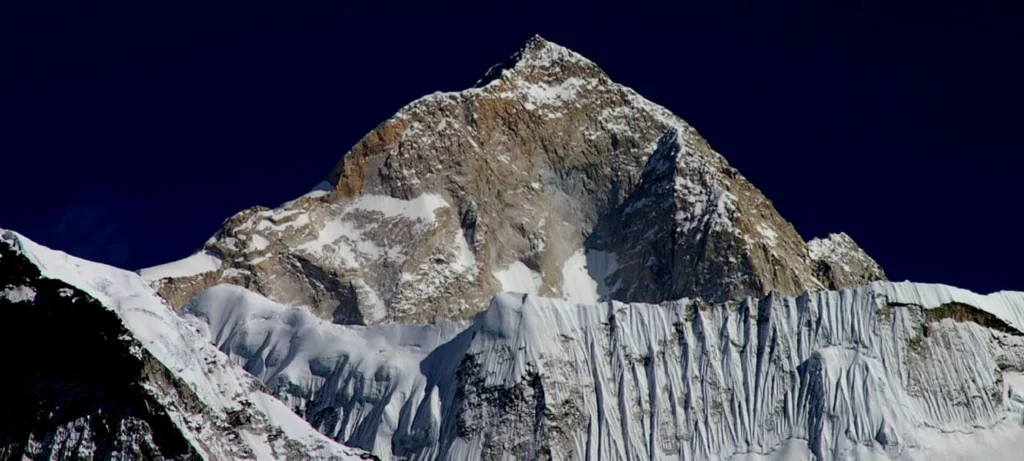
If you’ve ever wondered where Mount Makalu is located, you’re about to discover one of the Himalayan region’s most breathtaking and underrated giants. Mount Makalu is in Nepal, nestled on the border between Nepal and Tibet (China), making it a truly cross-boundary marvel of nature.
Standing as the fifth-highest mountain in the world, Makalu has fascinated mountaineers, geographers, and adventure lovers for generations. Whether you’re searching for Mount Makalu kahan hai or simply curious about mount makalu in general, this comprehensive guide covers everything from its precise location on the map to fun facts, base camp details, and the rich cultural traditions surrounding it.
Table of Contents
Where Is Mount Makalu Located?
So, where is Mount Makalu located? Mount Makalu sits in the Mahalangur Himalayas, in the Sankhuwasabha District of northeastern Nepal. It lies approximately 19 kilometers (12 miles) southeast of Mount Everest, making it part of the same dramatic mountain chain that dominates the roof of the world.
For anyone looking at where Mount Makalu is located in map of Nepal, you’ll find it in the far northeastern corner of the country, close to the border with Tibet. If you pull up mount makalu in map view, it appears flanked by deep river valleys and surrounded by towering ridges that make it one of the most isolated peaks in the Himalayas. The Mount Makalu border runs between Nepal and the Tibet Autonomous Region of China, adding an international dimension to its geography that makes it unique among the world’s highest peaks.
How Tall Is Mount Makalu?
The summit of Mount Makalu reaches an elevation of 8,485 meters (27,838 feet) above sea level. This makes it the fifth-highest mountain in the world, ranking just behind Lhotse and above Cho Oyu in the global hierarchy of extreme peaks. Its distinctive four-sided pyramidal shape sharp, steep, and nearly symmetrical makes it immediately recognizable and particularly challenging for climbers.
Facts About Mount Makalu
There are many remarkable facts about Mount Makalu that set it apart from the other 8,000-meter peaks:
Name and History
The name “Makalu” is believed to derive from the Sanskrit word Maha Kala, meaning “Great Black One,” a reference to its dark, imposing rock faces that loom dramatically against the Himalayan sky.
First Ascent
The summit was first reached on May 15, 1955, by a French expedition team led by Jean Franco. Lionel Terray and Jean Couzy were among the climbers who reached the top, making France the first nation to conquer Makalu.
Difficulty
Among the 8,000-meter peaks, Makalu is considered one of the most technically demanding. Its steep ridges and knife-edge arêtes make it a serious undertaking even for experienced high-altitude mountaineers.
Ecological Importance
The lower slopes of Makalu fall within the Makalu-Barun National Park, one of Nepal’s most pristine and biodiverse protected areas. The park is home to rare wildlife, including the snow leopard, red panda, and over 400 species of birds.
Isolation
Unlike Everest, Makalu does not attract mass tourism or commercial expeditions, which has helped preserve the natural and cultural environment around it.
Fun Facts About Mount Makalu
Looking for fun facts about Mount Makalu? Here are some lesser-known gems:
Makalu was the last of the 8,000-meter peaks to be seriously explored, partly because of its remote location and difficult approach. Despite being the world’s fifth-highest mountain, it receives a fraction of the climbers that Everest does each year, often fewer than 100 permit applications annually.
The mountain is visible from parts of Sikkim in India on clear days, offering spectacular long-distance views. Its pyramid shape is so geometrically striking that early surveyors and cartographers often remarked on its near-perfect symmetry.
At certain times of year, lenticular clouds form around the summit like a halo, giving the peak an almost mystical appearance that has inspired local legends for centuries.
Mount Makalu Base Camp
Mount Makalu base camp sits at an elevation of approximately 5,700 meters (18,700 feet), reached via a multi-day trek through the Barun Valley. The route to base camp is itself considered one of Nepal’s finest wilderness treks, passing through ancient forests of rhododendron and fir, alpine meadows, and dramatic glacial moraines.
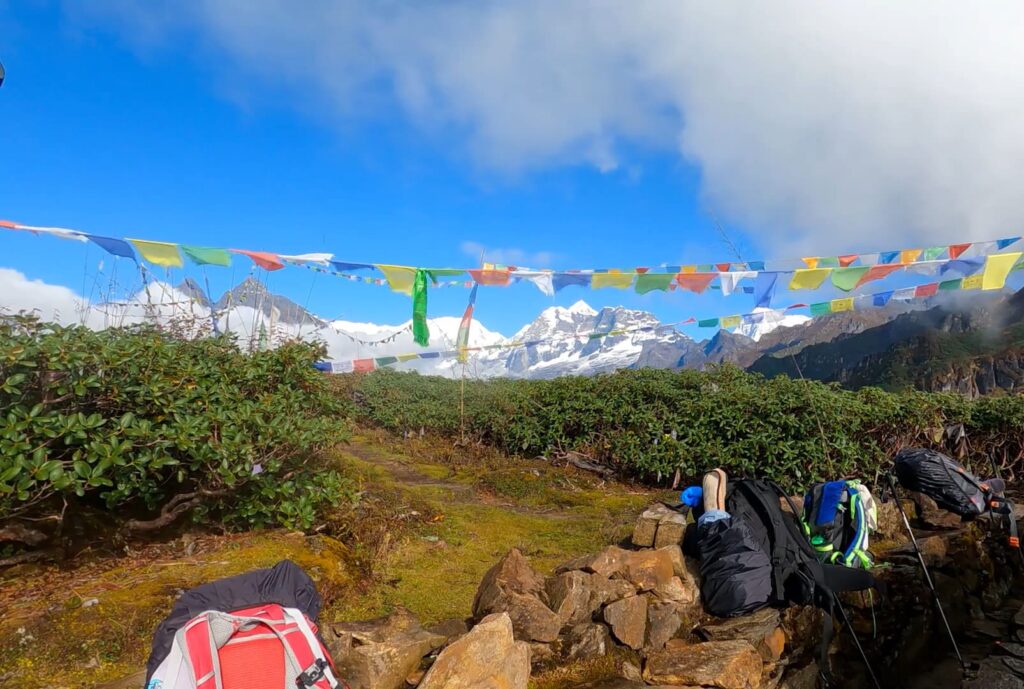
The trek typically begins from Tumlingtar or Num and takes around 10 to 14 days to reach base camp, depending on the route and acclimatization schedule. Unlike the heavily trafficked trails to Everest Base Camp, the Makalu Base Camp trail is raw, wild, and remarkably uncrowded, a true Himalayan wilderness experience.
From the base camp, the sight of Makalu’s enormous south face rising almost sheer from the glacier is considered one of the most awe-inspiring mountain views in the world.
Climbing Mount Makalu
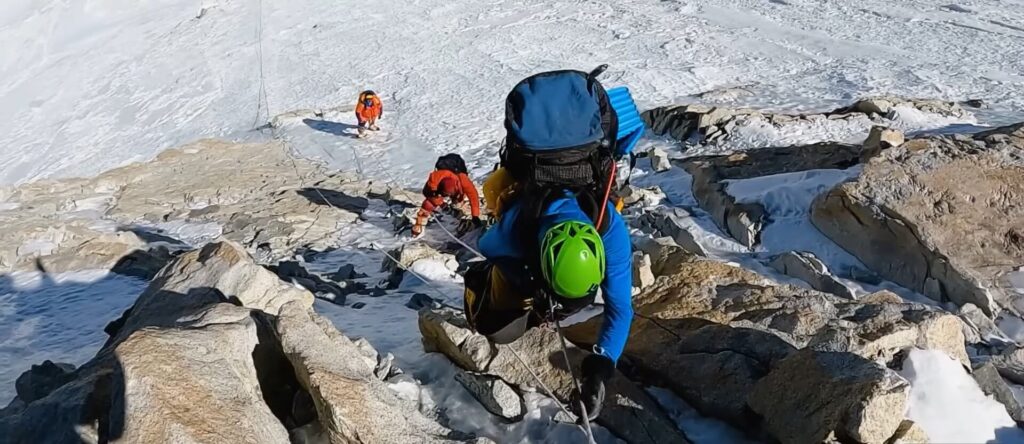
Climbing Mount Makalu is not for the faint of heart. It is widely regarded as one of the most technically demanding of all 8,000-meter mountains, with a summit success rate that is considerably lower than Everest or Cho Oyu. The standard route follows the Northwest Ridge, a relentless series of steep ice and rock sections that demands excellent technical climbing skills and exceptional endurance.
Key highlights of climbing Makalu include:
Technical Challenges
The climb involves navigating several exposed ridges and steep couloirs, particularly between Camp III and Camp IV. Weather windows are narrow and unpredictable, and the altitude demands careful acclimatization.
Climbing Season
The best seasons for climbing Mount Makalu are the pre-monsoon spring window (April to May) and the post-monsoon autumn window (September to October). Spring is generally preferred due to more stable weather conditions.
Permit Requirements
A government permit from Nepal’s Department of Immigration and the Department of Mountaineering is required. Fees for Makalu permits are lower than Everest, making it slightly more accessible from a cost perspective, though not from a technical one.
Record Climbers
Notable mountaineers who have conquered Makalu include Reinhold Messner, who climbed it without supplemental oxygen, and Ed Viesturs, as part of his quest to summit all 14 eight-thousanders.
Highlights of Mount Makalu
The Highlights of Mount Makalu go far beyond its summit elevation. This mountain offers a complete Himalayan experience that encompasses dramatic landscapes, biodiversity, and cultural richness:
The approach through Makalu-Barun National Park is one of the most pristine wilderness journeys in all of Asia. The park contains waterfalls, ancient forests, rare orchids, and some of the most extraordinary biodiversity in the Himalayas.
The views from the Makalu Base Camp and the surrounding ridgelines take in not only the peak itself but also Everest, Lhotse, Cho Oyu, and Kangchenjunga on clear days a panorama of five of the world’s highest mountains.
The Barun Glacier, which flanks the mountain, is one of the great glacial systems of the Himalayas, offering stunning ice formations and a window into the powerful geological forces that shaped this region.
Impact of Culture and Traditions on Makalu
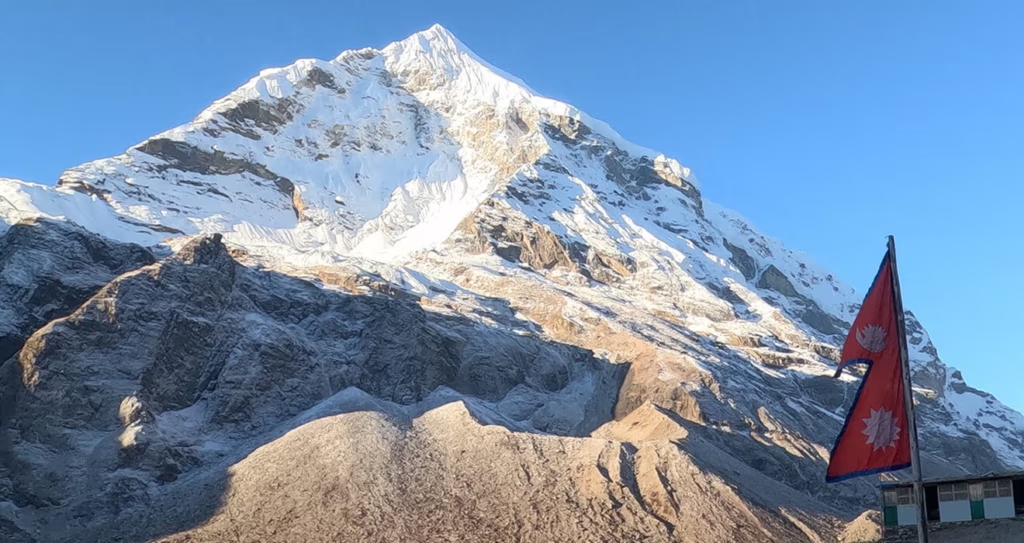
The Impact of Culture and Traditions on Makalu is profound and deeply felt in the communities that live in its shadow. The Rai and Sherpa peoples of the Sankhuwasabha District have inhabited these valleys for centuries, and their relationship with the mountains is spiritual, practical, and inseparable from their identity.
For local communities, the mountains are not merely geographic features they are sacred beings, home to gods and protector deities. Mount Makalu itself is regarded with deep reverence.
Before any major expedition departs, a puja ceremony is performed at base camp, where lamas offer prayers, burn juniper incense, and seek blessings from the mountain deity to ensure safe passage and a successful climb. Most climbing expeditions, regardless of the nationalities involved, participate in this ceremony as a mark of respect for local tradition.
The Sherpa people’s intimate knowledge of Himalayan weather, terrain, and high-altitude physiology has been essential to virtually every major Makalu expedition.
Their role has evolved from simple portering to skilled high-altitude guiding, and today, many Sherpa guides are among the most accomplished mountaineers in the world.
The local economy around the Makalu region is increasingly shaped by trekking and eco-tourism, which has brought new income while also raising questions about sustainable development and cultural preservation. Community-based tourism initiatives in the area aim to ensure that the economic benefits of Makalu’s growing fame stay within local villages rather than flowing exclusively to outside operators.
Festivals like Dashain, Tihar, and Losar (the Sherpa and Tibetan New Year) are celebrated with particular vibrancy in villages along the Makalu trekking route, and travelers who time their journey right will be treated to a rich cultural experience alongside the natural wonders.
Summary
Mount Makalu stands as one of Nepal’s most majestic and least-crowded high-altitude destinations. Whether you came here asking where Mount Makalu is located, how tall it is, looking for facts about Mount Makalu, or dreaming about climbing Mount Makalu, this peak offers something extraordinary: wild, unspoiled Himalayan grandeur, a genuine technical mountaineering challenge, and a living cultural landscape shaped by centuries of tradition. Mount Makalu kahan hai it is right there in the heart of Nepal’s northeastern Himalayas, waiting to be discovered.
Read Related Articles