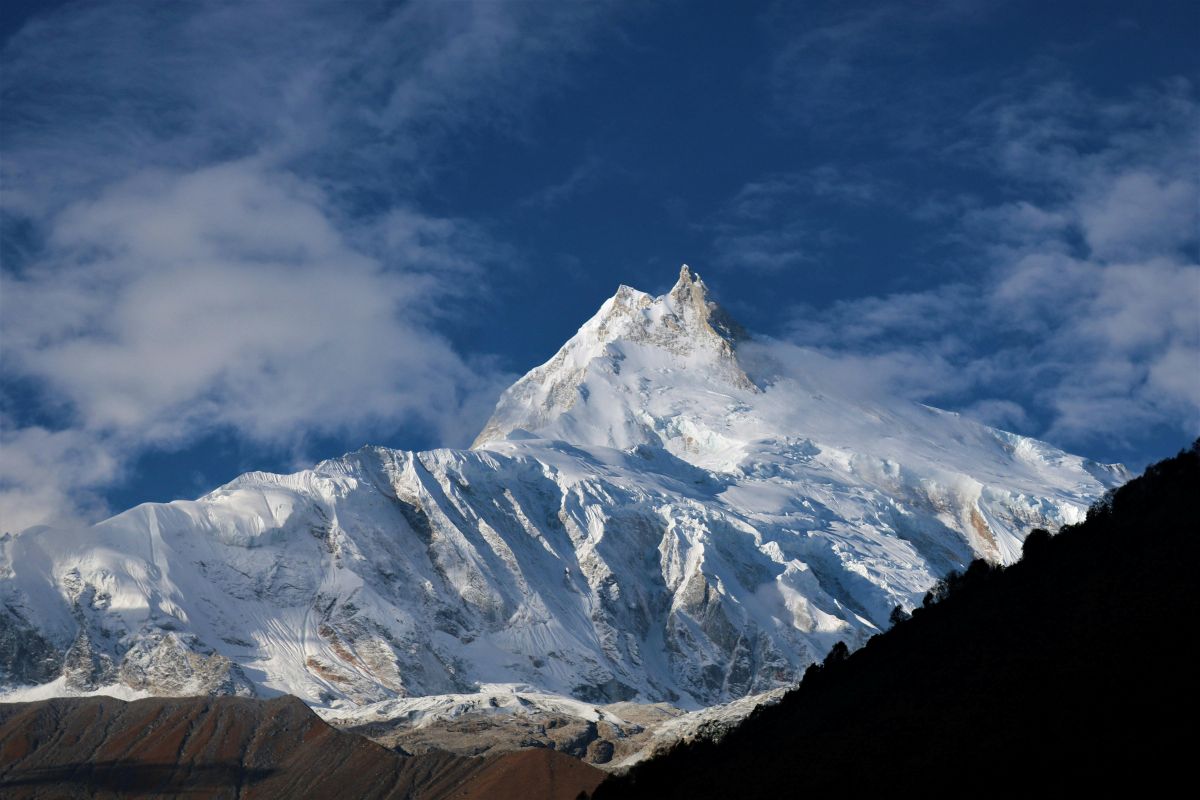
Most seasoned trekkers will tell you the same thing: the Manaslu Circuit Trek is, mile for mile, one of the most extraordinary trekking journeys in the entire Himalayan region. A complete loop around Mount Manaslu (8,163m) – the world’s eighth-highest peak – this 14-17 day high-altitude hiking route in the Gorkha District of Nepal winds through ancient Tibetan Buddhist villages, pristine rhododendron forests, dramatic river gorges, and wide-open alpine meadows that few outside trekkers ever see.
Unlike the overcrowded trails of the Everest Base Camp trek or the Annapurna Circuit, the Manaslu Conservation Area remains a restricted trekking zone – meaning visitor numbers are strictly controlled, the environment is well-preserved, and the cultural authenticity of the Nubri and Tsum Valley communities remains largely intact.
But here’s the question most trekking guides don’t ask openly: Is there a way to experience all of this without enduring the discomforts that drive people away?
The answer is yes. And it’s called a luxury Manaslu Circuit Trek.
This guide exists to help you understand exactly what that means – what you actually get, what the realistic limitations are, who it’s genuinely suited for, and how to plan a premium Manaslu trekking experience that delivers real value. No fluff. No overselling. Just the information you need from people who’ve walked this route many times over.
Let’s start from the beginning.
What Is a Luxury Manaslu Circuit Trek? Defining “Premium” on a Remote Route
The phrase luxury trekking in Nepal can mean very different things depending on the route and the operator using the term. On the Everest region or along the Annapurna luxury trek corridor, “luxury” can genuinely mean boutique lodges, heated rooms, fine dining, and spa facilities. The infrastructure is there.
The Manaslu region is different. This is one of Nepal’s most remote and least-developed trekking corridors. There are no luxury mountain lodges in the Everest sense. Power is frequently solar-only. Mobile connectivity drops out entirely for days at a time. The trail itself crosses the Larkya La Pass at 5,106 metres – a serious, physical undertaking regardless of how well-supported you are.
So what does “luxury” actually mean here?
On the Manaslu Circuit, a luxury trek means the highest quality of experience that this specific route and region can provide – achieved through superior logistics, handpicked premium teahouse accommodation, professional private guiding, personalized service, and contingency support systems (including helicopter rescue capability) that simply aren’t available on standard group treks.
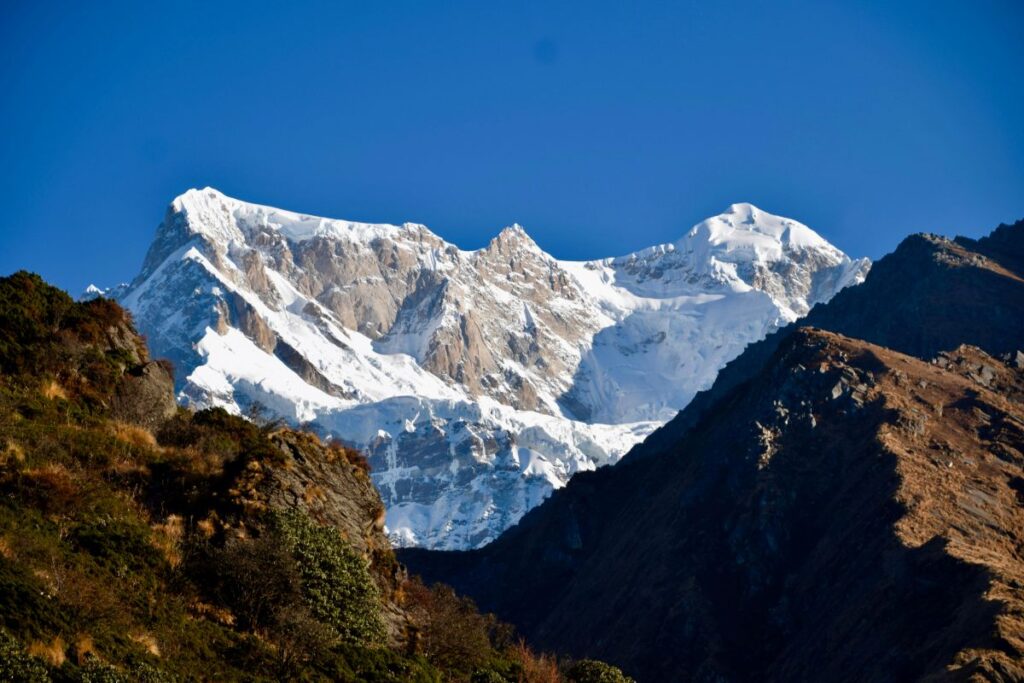
It’s the difference between making the best of what’s available and having an expert team ensure the best is always what you get.
Here’s what that looks like in practice:
Private Transportation – Door-to-Door Comfort from Kathmandu
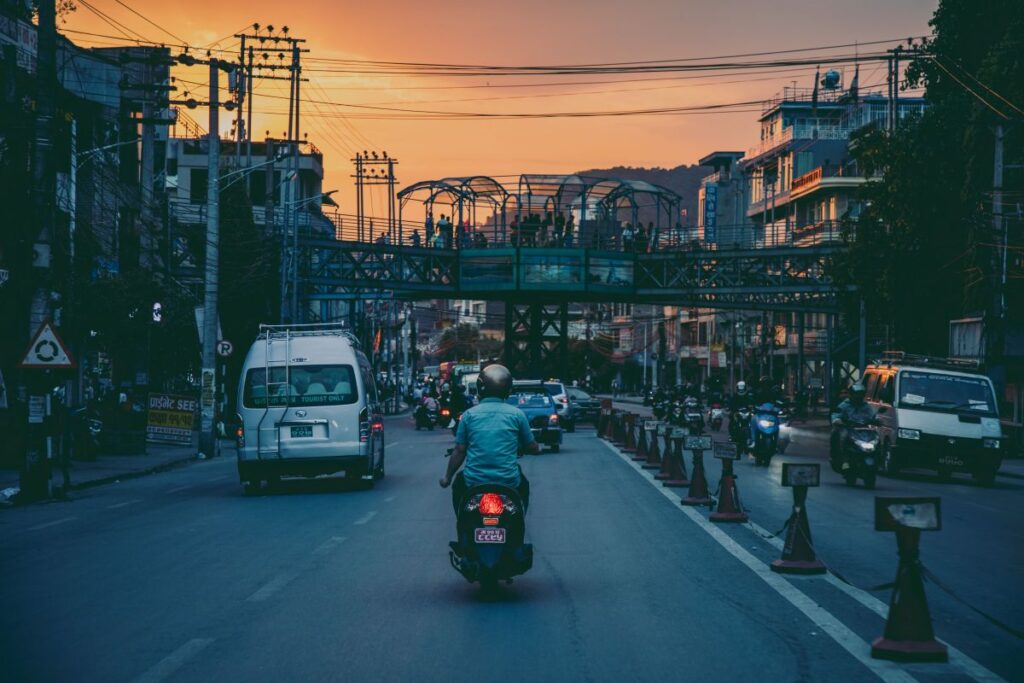
A premium Manaslu trekking package begins and ends with private transportation. From Kathmandu, you travel to the trailhead at Soti Khola or Machha Khola in a dedicated 4WD vehicle (typically a Toyota Land Cruiser or equivalent) – not a shared local bus or cramped jeep where you’re squeezed in with strangers’ luggage for 8-10 hours on rough mountain roads.
At the completion of the circuit in Dharapani or Besisahar, your private vehicle meets you directly. After 16+ days of trekking, this single detail – not having to negotiate transport while exhausted – makes a measurable difference to how you feel about the entire experience.
Why this matters for you: The roads to and from the Manaslu trailhead are genuinely rough. A comfortable, private vehicle means you arrive at the trailhead rested rather than battered, and you return to Kathmandu in comfort rather than standing in a crowded local bus.
Expert Private Guides and Dedicated Porters
This is arguably the single most important component of any high-end Manaslu hiking experience.
On a standard budget trek, you might share a guide across a small group, or work with a relatively inexperienced local guide who knows the basic route but not much beyond it. On a private luxury Manaslu trek, you get:
- A senior English-speaking licensed trekking guide with specific Manaslu Circuit experience (not just general Nepal trekking credentials)
- A knowledgeable cultural interpreter who can explain the significance of the Tibetan Buddhist monasteries, mani walls, and prayer flags you encounter throughout the Nubri Valley
- A trained first responder familiar with altitude sickness symptoms, acclimatization protocols, and emergency descent procedures
- A dedicated porter-to-trekker ratio of 1:1 or 1:2, ensuring no one carries an overloaded pack and everyone maintains a comfortable, sustainable pace
The right guide doesn’t just show you the trail. They enrich every day of the journey – helping you understand what you’re seeing, adjusting the pace when needed, and making proactive decisions that protect your health and safety before problems develop.
Why this matters for you: On a remote restricted route like Manaslu, where the nearest proper medical facility is many hours away, having an experienced, medically-trained guide is not a luxury add-on. It is your primary safety infrastructure.
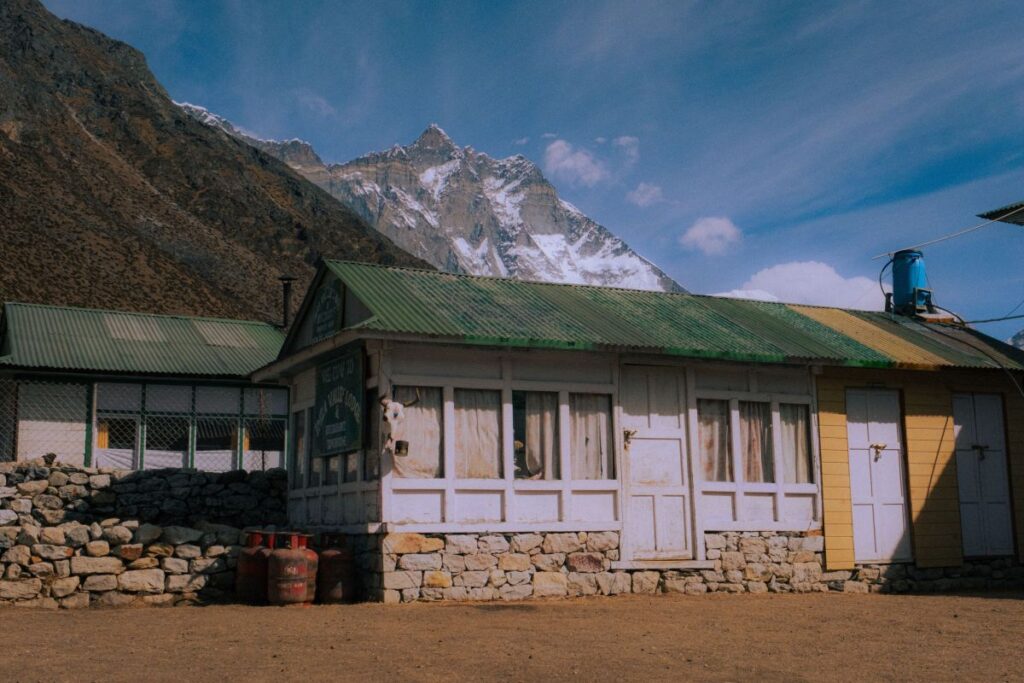
Best Available Teahouse and Lodge Accommodation
Let’s be completely transparent: the Manaslu Circuit does not have five-star mountain hotels. Anyone telling you otherwise is either mistaken or misrepresenting the route.
What does exist – and what a luxury operator systematically books for you – is the best available accommodation at every overnight stop along the circuit. In practical terms, this means:
- Private twin or double rooms rather than dormitories (in villages where private rooms exist)
- Attached bathrooms where available, especially at key stops like Sama Gaun and Namrung
- Proper beds with thick mattresses and duvets, not plywood platforms with thin foam pads
- Well-insulated rooms in lodges that are maintained to a higher standard
- Attentive, experienced hosts who have worked with premium trekking operators and understand service standards
A well-connected luxury operator pre-books these rooms weeks in advance – particularly critical during the peak trekking seasons of March-May (spring) and October-November (autumn), when the best rooms fill quickly.
Why this matters for you?
Sleep quality at altitude directly affects acclimatization, physical recovery, and the enjoyment of the following day’s trekking. The difference between a cold, drafty room and a warm, comfortable one at 3,500 metres is not trivial.
Hot Showers, Charging Facilities, and Wi-Fi Access
On a budget Manaslu trek, hot showers are a pleasant surprise when they happen and an accepted disappointment when they don’t. On a luxury trek, your experienced guide knows exactly which teahouses at each stop have reliable solar-heated or gas-heated shower facilities, and your itinerary is built around those options.
Similarly, electricity for charging phones, cameras, and devices and Wi-Fi connectivity (available in larger villages like Sama Gaun and Namrung) are factored into your lodge selections. For many trekkers – particularly professionals who need occasional connectivity, or photographers managing large volumes of images – these practicalities are genuinely important.
Why this matters for you?
After a 7-8 hour day on the trail, a hot shower is not a trivial comfort. It aids physical recovery, supports hygiene at altitude (important for health), and contributes meaningfully to your overall wellbeing.
Quality Meals and Pre-Arranged Dining
More detail on food below, but the short version: a premium Manaslu trekking experience includes pre-arranged meal plans with lodges along the route – ensuring fresh, hygienically prepared, varied food throughout the trek rather than whatever happens to be available on the night.
Fully Personalized, Private Service
The deepest value of a luxury trek is not any single amenity – it’s the personalization. Everything about the experience is structured around you: your fitness level, your pace preferences, your photographic interests, your dietary requirements, your rest day schedule.
Want to spend an extra acclimatization day at Sama Gaun because the direct views of Manaslu’s south face are too extraordinary to rush past? Your itinerary adjusts. Want to make a side trip to the Pungen Glacier or the turquoise-blue Birendra Lake? Your guide builds it in. Want to slow the pace through the high section of the route? Done, without negotiation.
On a standard group trek, you move at the group’s pace and follow a fixed itinerary. On a private luxury trek, the itinerary works for you – not the other way around.
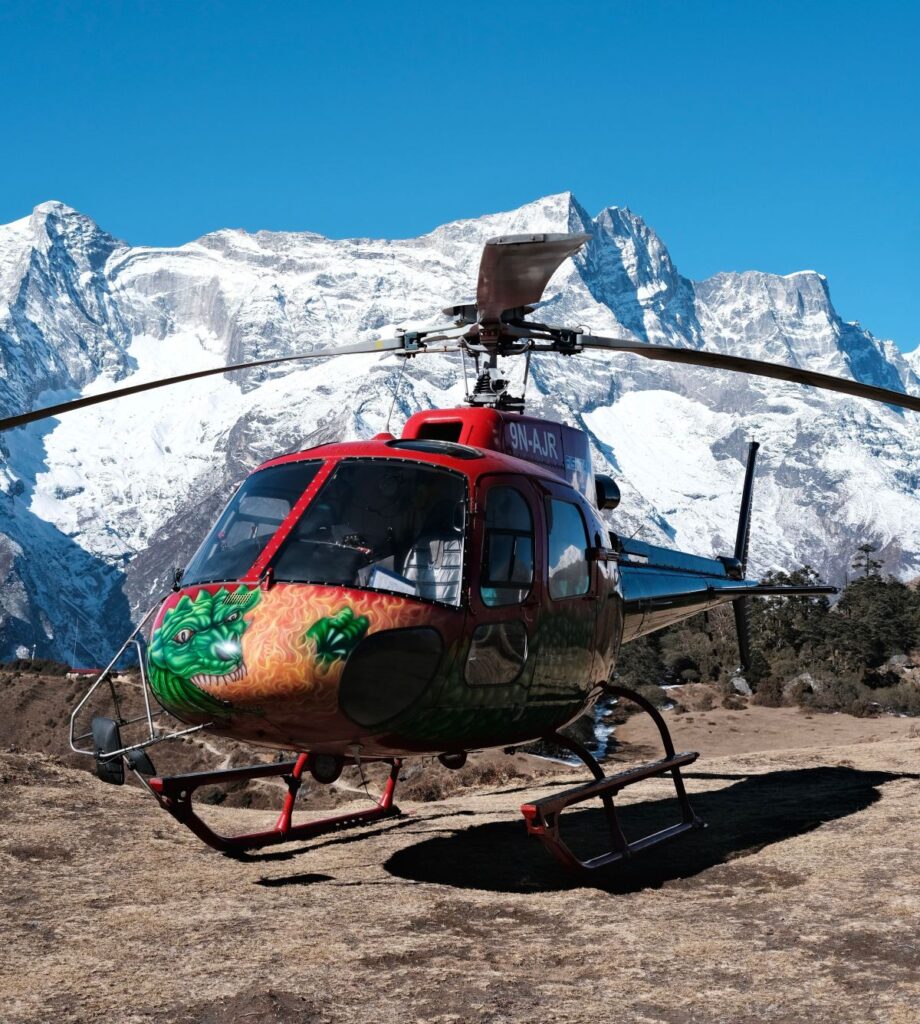
Helicopter Options – Safety, Flexibility, and Emergency Capability
This is the feature that most clearly separates a premium Manaslu trekking package from any standard alternative – and it matters more than many trekkers initially realize.
A luxury operator maintains helicopter rescue and evacuation capability throughout the trek. This means:
- Medical emergency evacuation in the event of serious altitude sickness (HACE, HAPE), injury, or illness – typically covered by comprehensive high-altitude travel insurance
- Helicopter exit options if severe weather closes the Larkya La Pass or if your schedule requires early departure
- Helicopter insertion for trekkers who want to skip the lower approach sections and begin at higher altitude for better acclimatization management
- Rescue capability in a region where the nearest hospital (in Gorkha or Kathmandu) can be 10-14 hours away by land
On a remote, high-altitude route like the Manaslu Circuit, this capability is not an extravagance. It is a critical safety layer that budget operators simply cannot provide.
Why Choose a Luxury Manaslu Trek Over a Standard Package?
Let’s address this directly. Standard Manaslu Circuit treks are not bad. Many trekkers have deeply rewarding experiences on budget or mid-range packages. The route itself is spectacular regardless of accommodation quality.
So why pay more? Here’s when the premium genuinely justifies itself:
Superior Physical Comfort Improves the Entire Experience
High-altitude trekking is physically demanding in a way that few other activities are. You’re covering 15-20 kilometres per day with 600-1,200 metres of elevation gain, in cold, oxygen-thin air, for two consecutive weeks. When your accommodation is consistently cold, your food is nutritionally poor, and your logistics are stressful, that cumulative toll compounds. A warm, comfortable bed and a well-prepared meal don’t just feel better – they help your body recover faster and perform better the next day.
Stress Reduction Lets You Actually Be Present
One of the most underrated benefits of a luxury trekking package is what it removes from your cognitive load. On a standard self-organized trek, you’re constantly managing: Do we have permits in order? Is there space at tonight’s lodge? Is this guide reliable? What happens if someone gets sick?
On a fully supported luxury trek, a professional team handles all of it. Your entire mental bandwidth is freed up to do what you came here to do: experience one of the world’s most extraordinary trekking routes with full presence and attention.
Medical Safety Infrastructure That Actually Works
Premium Manaslu Circuit trekking operators provide: comprehensive wilderness first-aid kits, pulse oximeters for daily blood-oxygen monitoring, guides trained in recognizing early-stage Acute Mountain Sickness (AMS), High Altitude Cerebral Edema (HACE), and High Altitude Pulmonary Edema (HAPE), satellite communication devices in zero-coverage zones, and pre-established relationships with Kathmandu-based helicopter rescue services.
This safety infrastructure is not theoretical. On the Manaslu Circuit, medical emergencies happen every season. Having the right support structure in place dramatically reduces both the risk and the potential severity of altitude-related illness.
The Right Choice for Specific Traveler Profiles
A luxury Manaslu trek particularly suits:
- Professionals with limited vacation days who cannot afford to lose time to preventable logistics failures
- Families trekking together across mixed fitness levels who need flexible pacing and reliable comfort
- First-time high-altitude trekkers who want maximum support during their initial experience above
4,000 metres
- Travelers over 50 who are fit and motivated but benefit from superior acclimatization monitoring and emergency preparedness
- Anyone with dietary restrictions or medical considerations who needs advance coordination rather than improvised on-the-trail solutions
Better Acclimatization Management – The Hidden Value
Proper altitude acclimatization on the Manaslu Circuit is not optional – it is the difference between completing the trek and being evacuated from it. A luxury operator builds your itinerary around evidence-based acclimatization schedules: rest days at Sama Gaun (3,530m), gradual daily elevation gains not exceeding 400-500m above 3,000m, mandatory health checks, and immediate descent protocols if warning signs appear.
On a budget group trek following a compressed timeline, acclimatization is often sacrificed to keep costs and days down. This is the single most common reason treks on the Manaslu Circuit go wrong.
Accommodation on a Luxury Manaslu Circuit Trek: Village by Village
Here is exactly what the best available accommodation looks like at each key overnight stop on the route – so you know what to realistically expect.
Machha Khola (900m) – Your First Night on the Trail
The primary overnight stop after the drive from Kathmandu, Machha Khola sits in a subtropical river valley before the altitude begins in earnest. The best lodges here are clean, well-run riverside teahouses with private rooms, proper blankets, and reliable hot meals. At this elevation, sleep quality is excellent and facilities are relatively good.
Luxury tip: This is one of the lower stops on the route – use it to rest well before the serious climbing ahead.
Jagat (1,410m) – The Last Checkpoint Before the Restricted Zone
A significant administrative checkpoint on the Manaslu route, Jagat has a handful of well-established lodges with attached bathrooms in the premium rooms, reliable hot water, and electricity for charging devices. The best options here are family-owned, genuinely hospitable, and consistently maintained to a higher standard than many teahouses further up the trail.
Namrung (2,660m) – Where Tibetan Culture Begins to Dominate
As you gain altitude, the Tibetan Buddhist influence on architecture, culture, and daily life becomes increasingly pronounced. Namrung marks a genuine cultural transition point. The best lodges here offer private rooms (attached bathroom in the top options), solar-heated showers, and well-stocked dining rooms with yak-dung stoves that make evenings genuinely warm and comfortable – a more significant consideration at this elevation.
Sama Gaun (3,530m) – The Jewel of the Manaslu Circuit
This is the most important stop on the entire Manaslu Circuit – both for acclimatization and for sheer, overwhelming mountain scenery. Sama Gaun sits directly opposite the south face of Mount Manaslu, and the views from lodge terraces here rank among the most extraordinary in the entire Himalayan region.
You will spend at least two nights here (one rest day mandatory for proper acclimatization before crossing Larkya La). The best lodge in Sama Gaun – widely considered the finest accommodation on the entire Manaslu Circuit – offers private rooms with attached bathrooms, hot showers, thick duvets, and a well-stocked dining room. The terrace views of Manaslu at sunrise are, without exaggeration, life-changing.
Luxury tip: Use your acclimatization day here to hike to the Pungen Glacier viewpoint or Birendra Lake – side trips that most budget trekkers skip but that are among the trek’s most memorable experiences.
Samdo (3,875m) – Remote, Atmospheric, Near the Tibetan Border
A quieter, more isolated village close to the Nepal-Tibet border, Samdo sees fewer trekkers than Sama Gaun and has a more austere, frontier atmosphere. Accommodation is simpler here, but the best teahouses offer clean, insulated rooms with reliable meals and basic but functional facilities. What Samdo lacks in amenities it more than compensates for in raw, genuinely remote Himalayan atmosphere.
Dharapani (1,860m) – The Journey’s End (and the Gateway Back to Comfort)
After crossing the Larkya La Pass and descending through the Marsyangdi River valley, Dharapani is where the Manaslu Circuit rejoins the Annapurna Circuit trail. After 16+ days above 2,000m, Dharapani feels positively well-appointed – there are several well-maintained lodges with comfortable rooms, reliable hot showers, diverse menu options, and mobile connectivity. Your private vehicle meets you here for the return journey to Kathmandu or an onward drive to Pokhara.
Food and Dining on a Luxury Manaslu Trek: What to Expect at Altitude
Food quality is one of the clearest differentiators between a standard and a premium Manaslu Circuit trekking experience. Here’s what you actually get on a well-organized luxury trek:
Fresh, Nutritious Local Cuisine
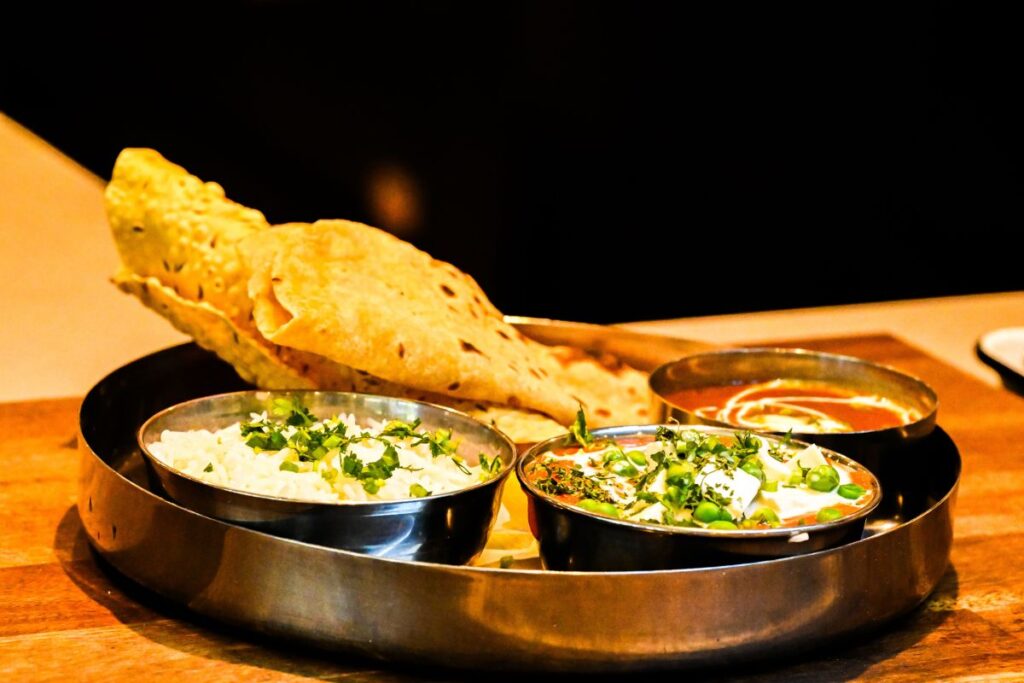
Dal bhat – the traditional Nepali meal of lentil soup, steamed rice, vegetable curry, and pickle – remains the backbone of trekking nutrition on the Manaslu route. On a luxury trek, it’s freshly prepared, nutritionally complete, and available in unlimited quantities (most teahouses refill rice and curry without additional charge). After a long day at altitude, this meal is not a compromise – it is genuinely the best fuel available.
As you gain altitude, Tibetan-influenced high-altitude cuisine appears on menus with increasing frequency: tsampa porridge (roasted barley flour), butter tea, thukpa (Tibetan noodle soup), and momos (steamed dumplings). These dishes are not only culturally significant – they are calorically appropriate for cold, high-altitude conditions.
International and Western Dishes at Better Lodges
The best teahouses on the circuit – particularly at Sama Gaun, Namrung, and Jagat – now offer a meaningful range of international options: pasta dishes, fried rice, vegetable pizza, pancakes with honey, porridge with banana and nuts, and various egg preparations. A luxury operator pre-arranges meal plans with lodges along the route, ensuring menu variety, freshness of ingredients, and advance preparation of any special dietary requirements.
Hygienic Food Preparation and Safe Water – Non-Negotiable on This Route
This is where a luxury trek genuinely earns a portion of its premium. Gastrointestinal illness is one of the most common – and most disruptive – health issues on any Himalayan trekking route. A luxury operator’s guide actively monitors food preparation hygiene at every lodge, ensures all drinking water is either boiled, filtered, or treated with appropriate purification tablets, and advises on specific items to avoid at each stop based on real-time knowledge of conditions on the route.
Getting sick with a stomach illness at 4,000 metres, two days’ walk from the nearest road, is a genuinely serious problem. A good luxury operator works systematically to prevent it.
Special Dietary Requirements – Handled in Advance, Not Improvised
Vegetarian, vegan, gluten-free, nut allergy, lactose intolerance – all of these are manageable on a luxury Manaslu trek when communicated clearly in advance. Your operator coordinates your dietary requirements with lodges along the entire route before you even arrive at the trailhead. No stressful miming at 4,200 metres, no accidentally eating something that makes you ill the night before Larkya La.
Is a Luxury Trek Genuinely Possible on Such a Remote Route?
We want to be completely transparent with you here, because the last thing you need is to arrive at the Manaslu trailhead with expectations the route cannot meet.
The Manaslu Circuit will not give you the luxury lodge experience of the Everest region. There are no Yeti Mountain Home lodges, no heated ensuite bathrooms in every village, no espresso bars or spa treatments. Several overnight stops – particularly Samdo and some of the smaller villages in the lower sections – have genuinely basic facilities regardless of how much you’re paying.
What a luxury operator does provide is:
- Relative excellence – the best that genuinely exists at every stop, consistently booked and confirmed in advance
- Superior logistics that eliminate preventable problems before they occur
- Professional, experienced human support that adapts to conditions as they develop
- Safety infrastructure (medical, communication, evacuation) that significantly reduces the risk profile of a challenging route
- True personalization that makes the experience feel tailored rather than generic
The result is an experience that is meaningfully and substantially better than a standard Manaslu trek – even when the ceiling on individual facilities is set by the infrastructure of a remote mountain region.
The mountain doesn’t compromise. But everything around the mountain? That’s where the difference lives.
Who Is a Luxury Manaslu Circuit Trek Best For?
Based on years of guiding experience on this specific route, here are the trekkers who consistently derive the most value from a premium Manaslu Circuit package:
Comfort-oriented adventure travelers who want authentic Himalayan wilderness – the real thing, off the tourist trail – but whose enjoyment is genuinely affected by poor sleep, bad food, or disorganized logistics. You want the adventure. You don’t want the austerity.
Time-constrained professionals who have a fixed, non-negotiable vacation window and cannot afford days lost to preventable illness or logistical chaos. For you, the premium is insurance as much as it is comfort.
Couples on milestone trips – honeymoons, anniversaries, significant birthdays, bucket-list journeys. The privacy, personalized pacing, and genuine comfort of a luxury trek makes the Manaslu Circuit a romantic adventure rather than a survival test.
Wildlife and landscape photographers who move slowly, stop frequently, and want a guide who understands that “the light is perfect right now” is a legitimate reason to pause the schedule. The side trips to Pungen Glacier, Birendra Lake, and the high viewpoints above Sama Gaun are extraordinary photographic opportunities that a rushed group itinerary rarely accommodates.
Trekkers over 50 who are fit, motivated, and experienced but benefit significantly from daily health monitoring, superior acclimatization management, comfortable overnight stops, and the peace of mind of knowing emergency evacuation capability exists. Age is not a barrier to the Manaslu Circuit. Adequate preparation and support are essential.
First-time high-altitude trekkers attempting their first experience above 4,000-5,000 metres. The medical support infrastructure, acclimatization management, and experienced guiding on a luxury trek provides a significantly safer entry point to serious high-altitude trekking than a budget package.
Cost of a Luxury Manaslu Circuit Trek: What to Budget and What You Get
Pricing varies based on operator, group size (luxury packages are typically private or semi-private), season, and the specific inclusions in your package. Here are realistic ranges as of 2026:
Trek Pricing Categories
| Trek Category | Approximate Cost Per Person (USD) | Best For |
|---|---|---|
| Budget / Standard Group Trek | $900 – $1,400 | Cost-conscious solo trekkers |
| Mid-Range Small Group Trek | $1,400 – $2,200 | Balanced comfort and value |
| Luxury Private Trek | $2,500 – $4,500 | Premium experience, maximum support |
| Ultra-Premium with Helicopter | $5,000 – $7,500+ | Maximum flexibility + helicopter segments |
What a Quality Luxury Manaslu Package Includes
- All required permits: Manaslu Conservation Area Permit (MCAP), Restricted Area Permit (RAP), TIMS card, Annapurna Conservation Area Permit (ACAP)
- Senior licensed English-speaking guide with Manaslu-specific experience
- Dedicated personal porter (1:1 ratio)
- Best available private lodge accommodation throughout
- Three meals per day (breakfast, lunch, dinner) + unlimited tea/coffee
- Comprehensive wilderness first-aid kit including pulse oximeter and supplemental oxygen
- Satellite communication device for emergency contact in zero-signal zones
- Daily health and acclimatization monitoring
- Pre-established helicopter rescue coordination (evacuation cost separate – covered by your travel insurance)
- All guide and porter wages, meals, accommodation, and equipment
Frequently Asked Questions about Manaslu Circuit Trek
Do I need prior trekking experience for a luxury Manaslu Circuit Trek?
Previous experience trekking at altitude is strongly recommended. The Larkya La Pass at 5,106m is a serious undertaking. Good physical fitness and at least one prior multi-day trekking experience (ideally at altitude) is the right baseline. Your luxury guide will prepare a physical training plan upon booking.
What is the best season for the Manaslu Circuit Trek?
Spring (March-May) and Autumn (October-November) are the optimal trekking seasons. Spring offers rhododendron blooms and clear views; autumn brings stable weather and excellent visibility. Manaslu can be trekked in winter by experienced trekkers, but Larkya La conditions are significantly more demanding.
How difficult is the Larkya La Pass crossing?
The Larkya La (5,106m) is the highest and most challenging day of the trek – typically a 10-12 hour day beginning before dawn. On a luxury trek, your guide will assess your acclimatization readiness before the crossing, start the day at an optimal time, and carry supplemental oxygen as a precaution.
Can I get altitude sickness even on a luxury trek?
Yes – altitude sickness is a physiological response that can affect anyone regardless of fitness or support level. What a luxury trek provides is earlier detection, faster response, and genuine evacuation capability if serious symptoms develop. This significantly reduces the medical risk compared to a budget trek where such support is absent.
Is the Manaslu Circuit suitable for solo travelers?
Absolutely. Many luxury Manaslu treks are booked by solo travelers who want the benefits of private guiding and service without the compromises of group travel. A private trek is designed entirely around your pace and preferences.
Read More: Kathmandu to Lukla Flight Booking