
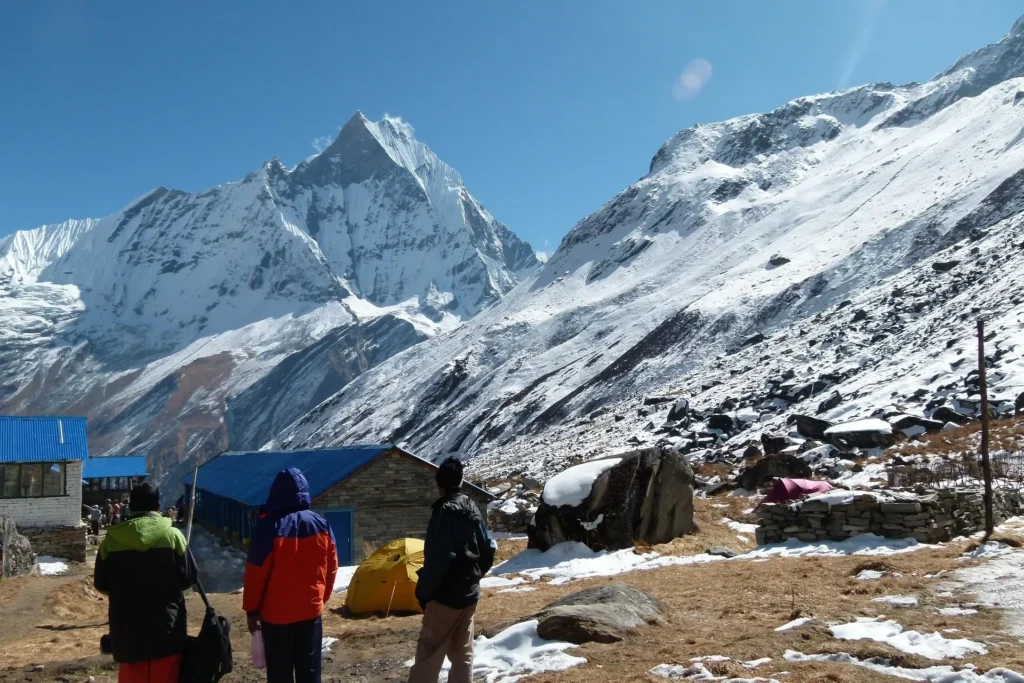
Are you planning to do the Annapurna Circuit trek and wondering about the best time to do the ACT trek? Well, you are at the correct place, as in the blog we will be discussing the best seasons, temperatures, trail conditions, and the weather. So, let’s get started.
Table of Contents
Autumn (September to November)
Autumn (September to November) is the best season for the Annapurna circuit trek, as this is the time when you will see that the weather is stable and clear. As the weather is clear, you can enjoy the beautiful mountain views of the Annapurna, Dhaulagiri, Machapuchhre, and other peaks from a distance.
The temperature is moderate, due to which you will feel neither too cold nor too hot, making your trek more authentic. As it’s the autumn season, you will see the rhododendrons, terraced fields, and forests are at their greenest and most vibrant after being nourished by monsoon rains. You will see the rivers and waterfalls are lively, adding beauty to the trek. It’s the time when Nepal’s biggest festivals, Dashain and Tihar, are held. You will see a good number of crowds who are locals and foreigners as well.
Temperatures during Autumn in the Annapurna Circuit
The temperatures during the Autumn inside the Annapurna region are moderate. If you are at the lower altitudes like Besisahar, Chame, and Manang. You will experience the daytime temperatures ranging from 15–25°C (59–77°F), whereas nights can drop to 5–10°C (41–50°F). If you are at a higher altitude, the daytime temperatures are cooler, which is around 5–15°C (41–59°F), whereas nights can be below freezing, especially above 4,500 m.
Trail conditions during the Autumn
The trail conditions during the Autumn are dry and stable due to the minimal rainfall of the Monsoon. The waters and rivers are flowing at a level that is perfect for crossing them. The trails are less muddy, which overcomes the risk of slipping. The tea houses and accommodations at every altitude are open, which makes the trek more comfortable.
Weather conditions during the Annapurna circuit trek
The weather conditions during the Annapurna circuit hike are mostly clear, which provides panoramic views of the Annapurna, Dhaulagiri, and the Machapuchhare ranges. The trek is safer and enjoyable. The days are longer, which gives you an edge to enjoy nature for more time.
Spring (March to May)
Spring(March to May) is another of the best seasons to trek in the Annapurna Circuit. Spring is the season of flowers in Nepal. You will see Rhododendrons blooming in the hills. You will see that the mountains are framed by colorful flowers, which create perfect photo opportunities. The lower temperatures are warm and comfortable for trekkers. You will see the clear mountain views of the Annapurna and Dhaulagiri in the same way as in the autumn.
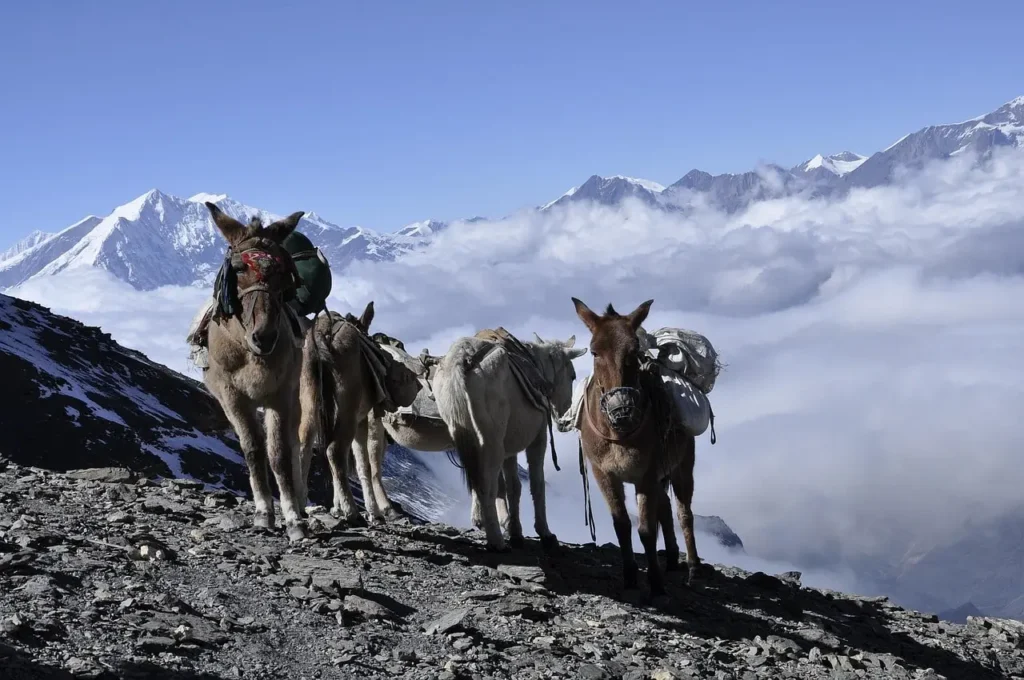
The Visibility of the mountains is excellent for sunrise and sunset photography. As spring is the best season to trek the Annapurna circuit, you will notice that the trekker crowd is less compared to autumn. Also, spring is the perfect season for Wildlife and Nature Lovers. If you are trekking in the Annapurna region, and that too in the spring, it will give you an opportunity to experience the Himalayan ecosystem at its most lively and vibrant.
Temperatures during Spring in the Annapurna Circuit
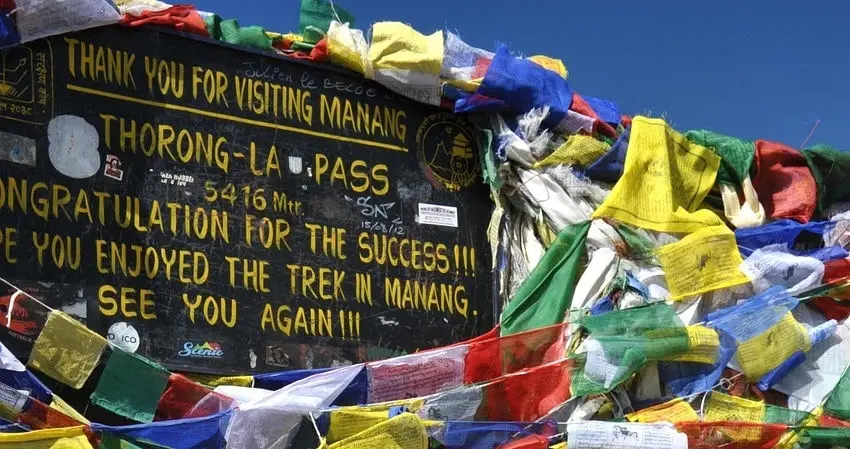
Temperatures in spring in the Annapurna circuit are moderate and comfortable for trekking in the same way as the Autumn. You can expect the Daytime temperatures around 15–22°C (59–72°F) and around night 5–10°C (41–50°F) in the lower altitudes like the Besisahar, Chame, and Manang. In the higher altitudes, Thorong La Pass, Muktinath, you can expect around 5–15°C (41–59°F) during the day and below freezing in the nighttime.
Trail conditions during the Spring
The trail conditions during the spring are mostly dry and stable, but occasionally, snow can be present in the higher altitudes. You can see the melting snow flowing in the waterfalls and rivers. Lower altitude paths are lush and green, with flowers starting to bloom, especially rhododendrons. Also, during the spring, the tea houses and the accommodations are fully operational.
Weather conditions during the Spring Annapurna circuit trek
The weather conditions in spring during the trek to the Annapurna circuit in Nepal are clear, though some clouds can be seen in the skies. You can expect some snowfall at higher altitudes, as it’s possible to have snowfall. You will have a longer day, which will provide you with an extra hour to trek and explore nature. You will see that the valleys and forests are covered in flowers. The spring season is pleasant as well, making it a perfect time for you to explore the mountains.
Winter (December to February)
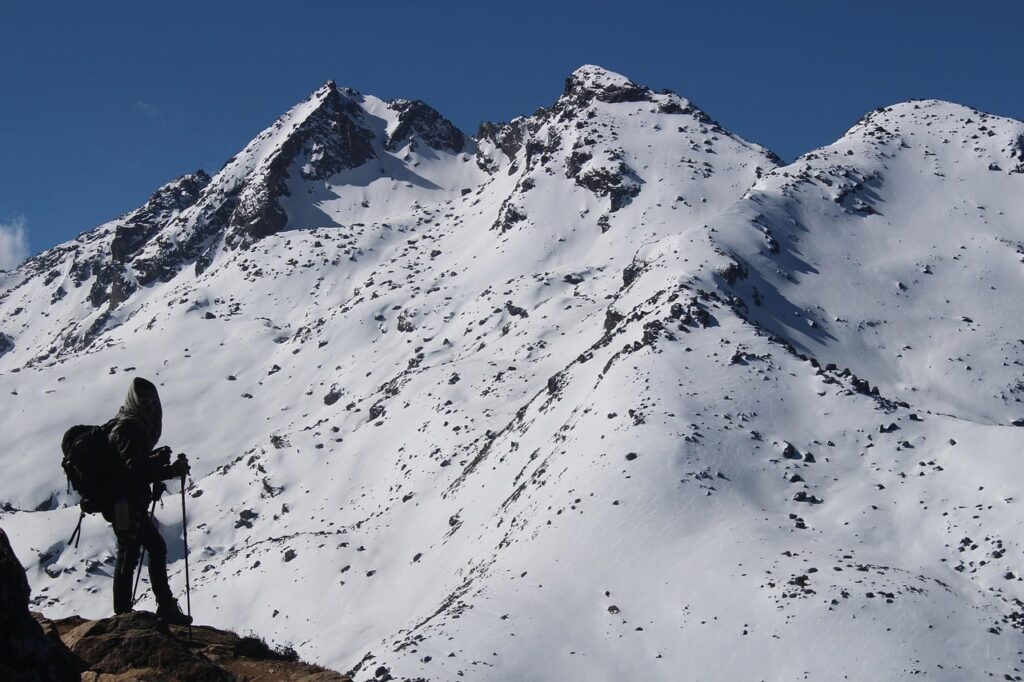
Winter (December to February) is for adventurous trekkers who are prepared for cold and snowy conditions. It offers clear skies, quiet trails, and snow-covered peaks, but requires proper gear, experience, and caution at high altitudes. It’s the off-season when trekkers rarely visit during these time periods. But if you prefer solitude and want to experience the raw Himalayan life, it’s ideal for you. During this time, lodges, flights, and guides are less busy, so you can trek easily and comfortably at an affordable price.
Temperatures during Winter in the Annapurna Circuit
The Temperatures during winter are freezing, and if you are thinking of trekking at higher altitudes, its gonna be more difficult for you. Normally, the temperatures at lower altitudes lie between 5–15°C (41–59°F) in the daytime and 0–5°C (32–41°F) during the nighttime. At the higher altitudes, it’s extremely cold with daytime temperatures ranging from -5 to 5°C (23–41°F) and nighttime temperatures ranging from -5 to -15 °C (5°F).
Trail Conditions during Winter
The trail conditions during winter are mostly dry at the lower altitudes, but the higher altitudes often have snow and ice on the trail. Sometimes, due to the heavy snowfall, the Thorong La pass might be covered and blocked with the snow, making an incomplete trek for you if you are planning in winter. Also, the trials are challenging and slippery. Due to the heavy snowfall, the high altitude tea houses and accommodations will be closed, which will increase your difficulty level, and you will need to prepare everything by yourself.
Weather Conditions during the Annapurna Circuit Trek in Winter
Weather conditions during the Annapurna circuit trek in winter are clear and spectacular in terms of the mountain views. There is low and minimal rainfall, and there is no risk of landslides and mudslides. The high altitude winds are very cold and freezing. The daytime is shorter and the nights are longer.
Annapurna Circuit Trek in Monsoon
It is not suggested to trek the Annapurna circuit in the monsoon as the monsoon is the season of heavy rainfall in Nepal. The roads are mostly. The highways are closed due to the flooding. The temperatures are cloudy and not so good for trkkers. If you still want to trek the Annapurna circuit, you can do it; however, there will be a risk of landslides, making your trek challenging.

Temperatures during Monsoon
Temperatures during the monsoon range from 20–28°C (68–82°F), and the nights are around 12–18°C (54–64°F) at the lower altitudes. However, the days are 5–15°C (41–59°F) and the nights might drop to 0°C (32°F). The climate is humid and warm during the trek.
Trail Conditions during Monsoon
The trail conditions during the monsoon are wet, muddy, and slippery, which increases the risk of falls and landslides. The River crossings can become dangerous due to swollen rivers and strong currents of water. You will see that the landslides are seasonal, which may affect your trekking itinerary, and you will need an extra buffer day.
Weather Conditions during Monsoon
The weather conditions during the monsoon are frequent rainfall, which will be heavy and unpredictable. You will see that the clouds and fog are creating obstructions for the mountain views. The humidity will be high, creating problems for trekking at such altitudes. There will be a risk of leeches, slippery paths, and minor floods in lower areas.
Annapurna Circuit Trek Related Contents
Why I Picked Annapurna Circuit Over Other Treks?
Why the Annapurna Circuit Trek Should Be on Your Bucket List?
How to Choose the Best Trekking Agency for the Annapurna Circuit Trek?